Timing Matters
When you eat matters more than what you eat. This is the single most important principle of pre-training nutrition, and it is the one most beginners get wrong.
A full meal 30 minutes before training will sit in your stomach and make you sluggish. During intense exercise, your body diverts blood flow away from the digestive system and toward working muscles — a process called exercise-induced splanchnic hypoperfusion. If there is still a large volume of food in your stomach when this happens, you get nausea, cramping, and that heavy, sloshing feeling that makes every round miserable. That same meal two to three hours beforehand gives your body enough time to digest, absorb the nutrients, and convert carbohydrates into readily available muscle glycogen — the primary fuel source for high-intensity boxing work.
Canelo Alvarez's nutritionist Alejandro Gonzalez has spoken publicly about timing Canelo's pre-training meals exactly 2.5 hours before sessions. At that level, the margin between peak energy and stomach distress is measured in minutes.
Training early morning and cannot eat a full meal? A small snack 45-60 minutes before works fine. Many fighters — including Anthony Joshua during training camp — train at 6 or 7 AM and rely on a light snack plus water rather than a full breakfast. The goal is stable energy without stomach issues. A piece of fruit, a small bowl of oatmeal, or a couple of rice cakes with honey is enough to top off liver glycogen stores that deplete overnight during sleep.
One timing strategy that works well for afternoon or evening sessions: eat your main pre-training meal at your normal lunch or dinner time, then have a small carbohydrate top-up (a banana or a handful of dates) 30-45 minutes before you wrap your hands. This gives you both the sustained energy from the meal and the quick-access fuel from the snack.
The Ideal Pre-Training Meal
Boxing demands both sustained energy (footwork, defense, shadow boxing) and explosive bursts (combinations, power shots). Physiologically, your body uses glycogen (stored carbohydrate in muscles and liver) as the primary fuel for both the aerobic and anaerobic systems that boxing relies on. A three-minute round at fight pace can burn 30-50 calories, and most of that comes from glycogen. Your pre-training meal should fuel both energy systems by prioritizing carbohydrates with moderate protein and minimal fat.
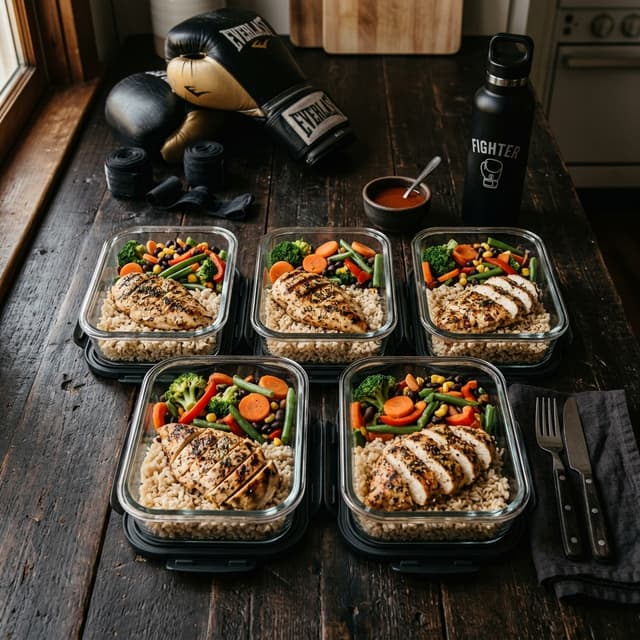
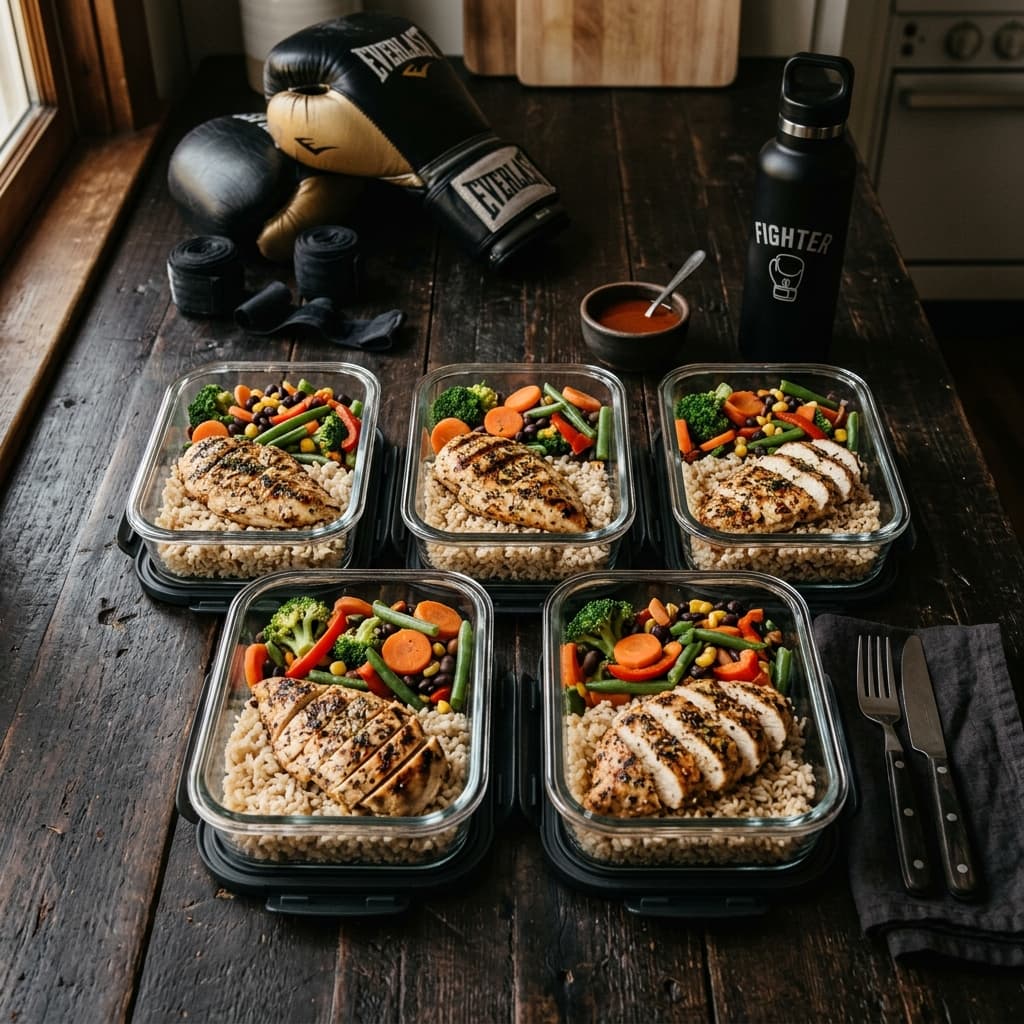
Here is what a well-structured pre-training meal looks like in practice: 1.5 cups of white rice with 4-6 ounces of grilled chicken breast and a small portion of steamed vegetables, eaten 2-2.5 hours before training. Alternatively: a bowl of oatmeal with a sliced banana and a tablespoon of honey, plus two scrambled eggs on the side. These meals provide 40-60 grams of carbohydrates for energy, 20-30 grams of protein for muscle support, and minimal fat to avoid slowing digestion.
Manny Pacquiao's pre-training meals during fight camps typically consisted of white rice with fish or chicken — simple, carb-heavy, and easy to digest. There is nothing exotic about what elite fighters eat before training. The key is consistency and simplicity.
Complex carbohydrates: Oatmeal, white or brown rice, sweet potatoes, whole grain bread, or pasta. These provide steady energy by releasing glucose gradually rather than spiking your blood sugar and crashing 45 minutes into your session. White rice digests faster than brown rice, making it a better choice if you are eating closer to training time.
Moderate protein: Chicken breast, eggs, Greek yogurt, or white fish. Aim for 20-30 grams — enough to support your muscles and provide amino acids but not so much that digestion competes with your workout. A common mistake is eating a massive protein serving pre-training, which slows gastric emptying and leaves you feeling bloated during rounds.
Low fat: Fat slows digestion significantly — it takes 6-8 hours to fully digest a high-fat meal. Save the fats (avocado, nuts, olive oil) for after training or for meals earlier in the day. Keep this meal under 10-15 grams of fat total.
Hydration: Drink 16-20 ounces of water in the two hours before training, then sip 4-8 ounces in the 30 minutes before you start. Even 2% dehydration reduces punching power, reaction time, and cardiovascular efficiency. Dehydration kills performance before you throw a single punch. If your urine is dark yellow before training, you are already behind.
Quick Pre-Training Snack Options
Training within 60 minutes? Keep it simple and carb-focused. At this point, you do not have time for a full digestive cycle. You need fast-acting carbohydrates that enter your bloodstream quickly and top off glycogen stores without sitting heavy in your stomach.
A banana with a tablespoon of peanut butter provides roughly 30 grams of fast-digesting carbs plus a small amount of fat for sustained release. A small bowl of oatmeal with honey gives you both complex and simple carbohydrates. A piece of toast with jam or a couple of Medjool dates are other excellent options that many fighters rely on.
These give you fast-acting energy without the digestive load of a full meal. The principle: the closer to training you eat, the simpler the food should be. Two hours out, you can handle rice and chicken. Thirty minutes out, you want something that is practically pre-digested — fruit, honey, or white bread.
One tip: avoid protein shakes before training — the liquid volume can slosh in your stomach during movement, especially during rounds that involve a lot of lateral motion and level changes. If you feel that uncomfortable sloshing sensation, it breaks your focus and limits your willingness to throw body shots that require bending at the knees.
Another common pre-training snack mistake: energy bars loaded with fiber and protein. These are marketed as "pre-workout" fuel but often contain 10-15 grams of fiber that slows digestion and can cause bloating and gas during training — the last thing you want when your training partners are standing close. Read the label. For pre-training, you want high carbs, moderate sugar, low fiber, low protein.
A practical approach used by many amateur and professional fighters: keep a bag of bananas and a jar of honey in your gym bag. It is cheap, portable, and never lets you down.
What to Avoid
High-fat meals (burgers, fried food, pizza) sit heavy and compete with your muscles for blood flow during digestion. When you eat a fatty meal, your gastrointestinal system demands significant blood flow to process the fat through bile production and absorption. During high-intensity exercise, your working muscles are demanding that same blood flow. The result is a tug-of-war that leaves you feeling nauseous and sluggish — neither your digestion nor your training gets what it needs.
High-fiber meals (large salads, bean-heavy dishes, bran cereals) can cause bloating, gas, and cramping during intense activity. Fiber draws water into the intestines and ferments in the gut, producing gas. In a calm, seated state this is not a problem. During a three-minute round of heavy bag work with constant core engagement, it is miserable. Save the high-fiber foods for meals earlier in the day or for rest days.
Dairy bothers many people during intense exercise, even those who are not lactose intolerant at rest. The jostling of high-impact training can exacerbate minor dairy sensitivities. If you notice any stomach discomfort after drinking milk or eating cheese before sessions, eliminate dairy from your pre-training window and see if the issue resolves.
Energy drinks give you a short caffeine and sugar spike followed by a crash — often right around the third or fourth round, which is exactly when you need sustained energy most. The high sugar content (often 40-60 grams) causes a rapid insulin response that can actually leave you more fatigued than if you had consumed nothing.
If you need a stimulant boost, a cup of black coffee (roughly 100-200mg of caffeine) 30-60 minutes before training is a significantly better option. Caffeine has been shown in sports science research to improve reaction time, reduce perceived exertion, and increase power output. Many professional fighters — including Terence Crawford — use coffee as their only pre-training stimulant. Keep it black or with minimal additions. Avoid adding cream or sugar that could cause stomach issues.
Spicy food is another one to avoid in the pre-training window. Capsaicin can cause acid reflux during intense exercise, and the burning sensation is amplified when your core temperature rises during training.
Post-Training: The Recovery Window
Within 30-60 minutes after training, eat a meal that combines protein and carbohydrates. This window is often called the "anabolic window" — while the science shows it is slightly wider than originally believed, there is still strong evidence that eating soon after training optimizes glycogen resynthesis and muscle protein synthesis.
Protein repairs the muscle tissue broken down during training. Boxing is particularly demanding on the shoulders, core, and legs — throwing hundreds of punches creates micro-tears in the deltoids, triceps, and latissimus dorsi that need amino acids to rebuild. Aim for 25-40 grams of protein in your post-training meal.
Carbohydrates replenish the glycogen your muscles burned through during rounds. After a hard 6-round session, your muscle glycogen stores can be depleted by 40-60%. Eating carbohydrates within that first hour after training can double the rate of glycogen resynthesis compared to waiting two or more hours. This matters especially if you train on consecutive days — showing up to tomorrow's session with half-empty glycogen tanks means less power, slower reactions, and earlier fatigue.
Some easy post-training options: chicken breast with white rice (the classic fighter's meal), a protein shake blended with a banana and oats, eggs with toast and avocado, or Greek yogurt with granola and berries. The meal does not need to be elaborate — it needs to be high-protein and high-carb, eaten consistently.
Do not skip this. Fighters who skip post-training nutrition because they are trying to lose weight or simply cannot be bothered end up in a cycle of declining performance. Each session digs a recovery hole that the next meal is supposed to fill. Skip it, and the hole gets deeper. Within a week of skipped post-training meals, your power drops, your reaction time suffers, and your motivation to train decreases. What you eat after training directly affects how you feel — and how you perform — at your next session.
See these techniques broken down by featured creator Coach Josh.
Get the complete fighter nutrition guide
The Boxing Blueprint is a 4-part video course covering fundamentals, conditioning, footwork, and fight strategy.
View The Boxing BlueprintReady to Practice?
Put what you learned into action with a guided shadowboxing session or timed heavy bag workout.