The Misconception
Walk into any commercial gym and you will find a "boxing" class. Upbeat music, choreographed combinations thrown at the air, maybe a cardboard cutout of a heavy bag. Participants shadow punch in mirror-lined rooms while an instructor calls out "jab-cross-hook" to the beat of a pop playlist.
It is an excellent cardio workout. But it is not boxing.
Real boxing conditioning is built around the actual demands of the sport: three-minute rounds, explosive bursts followed by recovery, sustained guard maintenance, and the ability to throw punches with power when you are exhausted. Watch any round of a Canelo Alvarez fight — the pace shifts constantly. Thirty seconds of stalking, then a ten-second exchange of sharp combinations, then a clinch, then another burst. That pattern of high-intensity output mixed with active recovery is the defining characteristic of boxing conditioning, and no choreographed fitness class replicates it.
The fitness industry borrowed the look of boxing without the substance. The result: millions of people believe they are "doing boxing" when they are really doing aerobics wearing gloves. Understanding this distinction matters because the way you train shapes the adaptations your body makes. Training in continuous movement for 45 minutes builds general aerobic capacity. Training in three-minute rounds with structured rest builds the sport-specific energy systems — phosphocreatine recovery, lactate buffering, and the mental ability to push through fatigue when your arms feel like concrete.
What Real Boxing Conditioning Looks Like
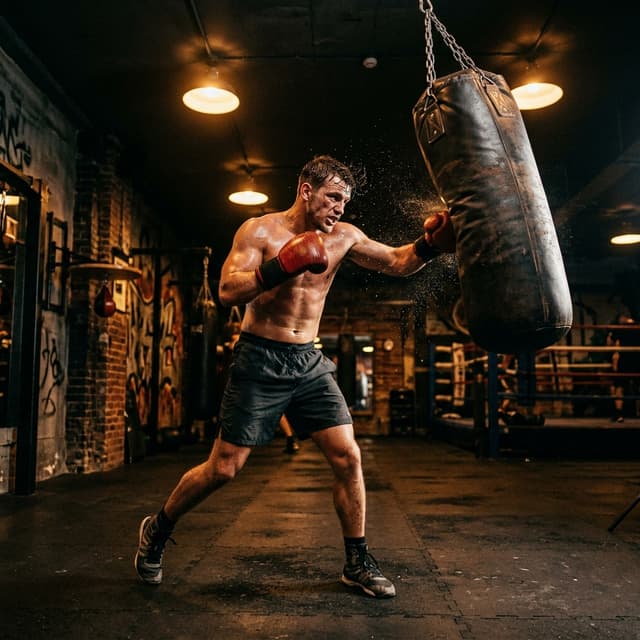
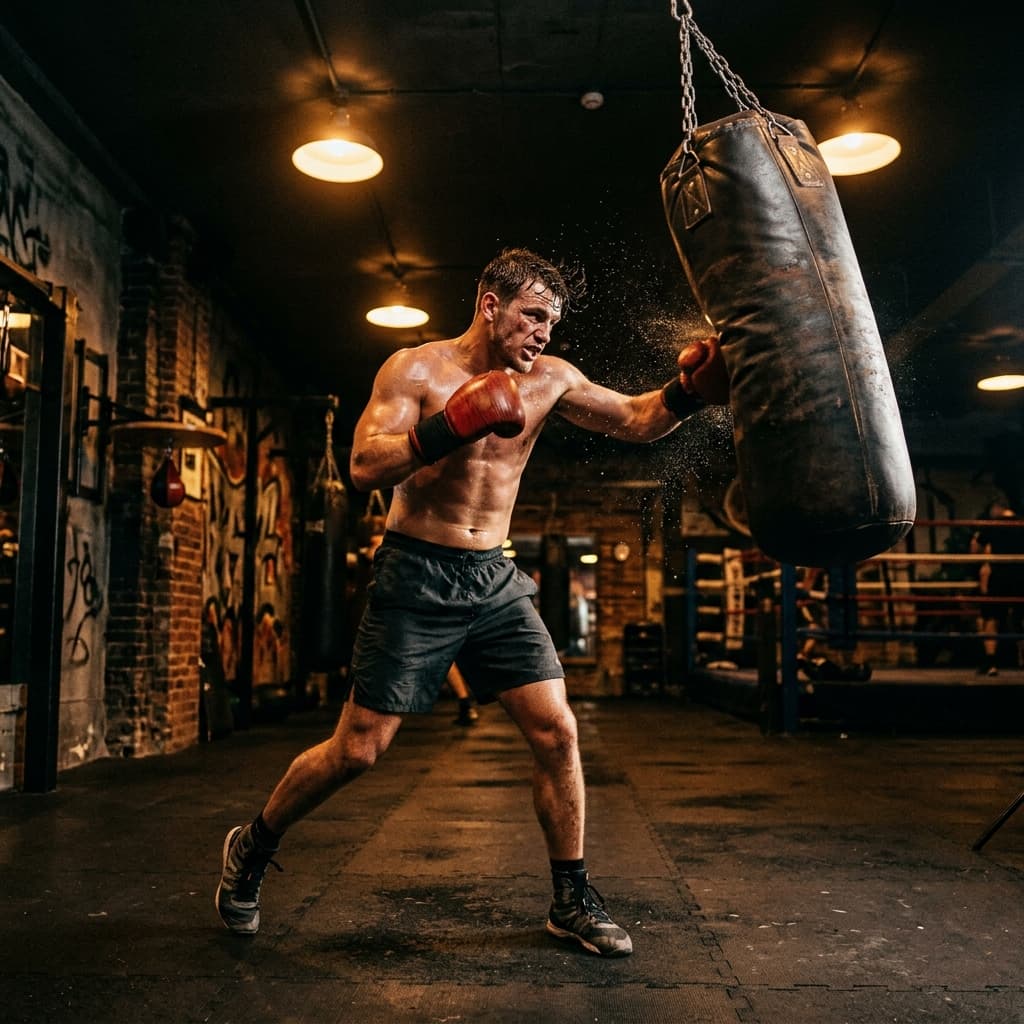
A fighter's conditioning session follows the structure of a fight. Three-minute rounds on the heavy bag, focus mitts, or shadow boxing, with 60-second rest periods. This is not arbitrary — it mirrors the exact format a boxer faces in competition.
The pace mimics the varying intensity of combat — bursts of high-output combination work followed by active recovery like footwork and single jabs. Watch how Vasyl Lomachenko trains on the heavy bag: he will throw a rapid five-punch combination, circle away using angular footwork for four or five seconds, then explode into another burst. That pattern — explode, recover, explode — trains the anaerobic and aerobic systems simultaneously.
Manny Pacquiao's conditioning sessions under Freddie Roach were legendary for their intensity. Pacquiao would hit mitts for 30 rounds in a single session, each round at near-fight pace. The round timer dictated everything. Every drill started and stopped with the bell, because the bell is the only clock that matters in boxing.
Biomechanically, real boxing conditioning differs from cardio kickboxing in how it loads the body. A proper cross requires hip rotation that engages the glutes, obliques, and rear deltoid in a kinetic chain from foot to fist. Holding your guard up for three straight minutes taxes the anterior deltoids and trapezius in a way that no amount of air punching replicates, because in real training you are sustaining isometric tension in the shoulders while throwing punches from that loaded position.
Round structure: Always train in 3-minute rounds with 1-minute rest. This is the single most important principle. If you are not training on a round timer, you are not training boxing conditioning.
Intensity variation: Mix explosive combination bursts (15-20 seconds of maximum output) with active footwork and single jabs. Your heart rate should spike during bursts and partially recover during movement phases — just like a real fight.
Full-body engagement: Every round should involve legs, core, and shoulders — not just arms. A properly thrown hook requires knee bend, hip torque, and core rotation. If only your arms are tired, you are punching wrong.
Mental endurance: Conditioning is as much about pushing through fatigue as it is about physical capacity. Rounds 4 and 5 of a training session are where you build the mental toughness to fight when exhausted — the place where amateur fights are won and lost.
The Problem With Cardio Kickboxing
Cardio kickboxing classes typically use 45-60 seconds of continuous movement without any round structure. The combinations are designed to keep your heart rate up — not to teach you how to fight. Instructors prioritize calorie burn metrics over punch mechanics, which makes sense for their goal but creates problems for anyone who wants to actually box.
There is nothing wrong with this as a fitness workout. But it does not build the specific conditioning a fighter needs. The energy systems are different. Boxing requires repeated bursts of anaerobic power (the phosphocreatine and glycolytic systems) with brief recovery periods. Continuous cardio primarily trains the aerobic system. Both matter, but a fighter who only trains aerobically will gas out during high-output exchanges — the exact moments when fights are won.
It also teaches habits that are counterproductive to actual boxing: wide, looping punches that telegraph your intent, a dropped guard that would get you knocked out in sparring, and a squared stance that exposes your centerline and removes your ability to generate rotational power. Biomechanically, the wide hooks thrown in cardio classes load the shoulder joint in a way that can cause impingement over time, whereas a tight, compact hook with proper elbow angle protects the joint.
The most insidious problem is false confidence. Someone who has taken cardio boxing classes for a year may believe they can handle themselves, when in reality they have never experienced the timing pressure of a punch coming back at them. The first time they spar, every habit they built in class becomes a liability.
If you enjoy cardio kickboxing for fitness, keep doing it — it burns calories effectively. But if your goal is to learn boxing, find a gym with a real heavy bag, a round timer on the wall, and a coach who corrects your form rather than just counting reps.
How to Train Real Boxing Conditioning at Home
You do not need a gym to train like a fighter. Some of the best conditioned boxers in history built their base with minimal equipment.
Shadow boxing in 3-minute rounds with 60-second rest is free and very effective. Floyd Mayweather Jr. shadow boxed obsessively — it was a core part of his conditioning even with access to world-class facilities. All you need is space to move and a round timer app on your phone. Focus on throwing realistic combinations with proper form, moving your feet between bursts, and keeping your guard up even when no one is watching. Shadow boxing with bad habits reinforces bad habits.
A jump rope costs less than a gym membership and builds footwork, timing, and cardiovascular endurance specific to boxing. Start with three rounds of basic bounce step. Progress to alternating feet, then boxer skip (the signature rhythm where you shift weight side to side). Advanced rope work includes double-unders and crossovers. Aim for 10-12 minutes of continuous rope work — if you can do that without tripping, your footwork conditioning is solid.
A heavy bag in the garage is a one-time investment that pays for years. A 70-pound bag, a ceiling mount or stand, and a pair of 16oz gloves with wraps is everything you need. Here is a simple home conditioning drill: set your timer for six three-minute rounds. Round 1 is jabs only. Round 2 is 1-2 combinations. Round 3 is hooks and uppercuts. Round 4 is body shots only. Round 5 is freestyle combinations. Round 6 is an all-out championship round. Rest one minute between each.
The key: structure every session around rounds. If you are training in rounds, you are training real boxing conditioning. If you are hitting the bag for "20 minutes" without a timer, you are getting a workout, but you are not building the specific energy systems that boxing demands. The round timer is the cheapest and most important piece of boxing equipment you will ever own.
See these techniques broken down by featured creator Coach Josh.
Get the complete fighter conditioning program
The Boxing Blueprint is a 4-part video course covering fundamentals, conditioning, footwork, and fight strategy.
View The Boxing BlueprintReady to Practice?
Put what you learned into action with a guided shadowboxing session or timed heavy bag workout.