Recovery Is Where the Gains Happen
Here's a truth most beginners ignore: you don't get stronger in the gym. You get stronger recovering from the gym. Training creates micro-tears in muscle fibers, depletes glycogen stores, and taxes your central nervous system. The adaptation — the part where you actually improve — happens during rest.
This isn't soft talk. It's exercise physiology. Every elite fighter understands this. Canelo Alvarez famously structures his camps around recovery as much as training. His strength and conditioning coach, Eddy Reynoso's team, programs mandatory rest days and monitors Canelo's heart rate variability to gauge readiness. He doesn't just train hard — he recovers hard.
Oleksandr Usyk takes a similar approach. During his preparation for the Tyson Fury fights, Usyk incorporated extensive recovery protocols including cold water immersion, massage therapy, and structured sleep schedules. The result? A fighter who looked fresher in championship rounds than opponents ten years younger.
If you're training six days a week and wondering why your speed isn't improving or your power feels flat, the answer probably isn't more training. It's better recovery.
Sleep Science for Fighters
Sleep is your single most powerful recovery tool. Nothing else comes close — not supplements, not ice baths, not compression boots. During deep sleep, your body releases human growth hormone (HGH), repairs damaged tissue, and consolidates motor learning. That combination you drilled for 30 minutes today? Your brain literally rewires itself to execute it faster while you sleep.
The research is clear: 7-9 hours of quality sleep is non-negotiable for athletes. A Stanford study on basketball players found that extending sleep to 10 hours improved sprint times and shooting accuracy by significant margins. The same principles apply to boxing — reaction time, hand speed, and decision-making all degrade with poor sleep.
Practical sleep protocols for fighters:
Keep a consistent sleep schedule — same bedtime and wake time, even on weekends
Stop screen time 60 minutes before bed. Blue light suppresses melatonin production
Keep your room cold — 65-68°F (18-20°C) is optimal for deep sleep
No heavy sparring or intense training within 4 hours of bedtime. The cortisol spike will keep you wired
If you train twice a day, a 20-30 minute nap between sessions accelerates recovery dramatically
Magnesium glycinate (300-400mg) before bed can improve sleep quality — one of the few supplements with strong evidence
Post-Training Nutrition Timing
The anabolic window isn't as narrow as supplement companies want you to believe, but nutrient timing still matters for fighters. After a hard session, your muscles are primed to absorb glucose and amino acids. The goal is to replenish glycogen and kickstart muscle protein synthesis.
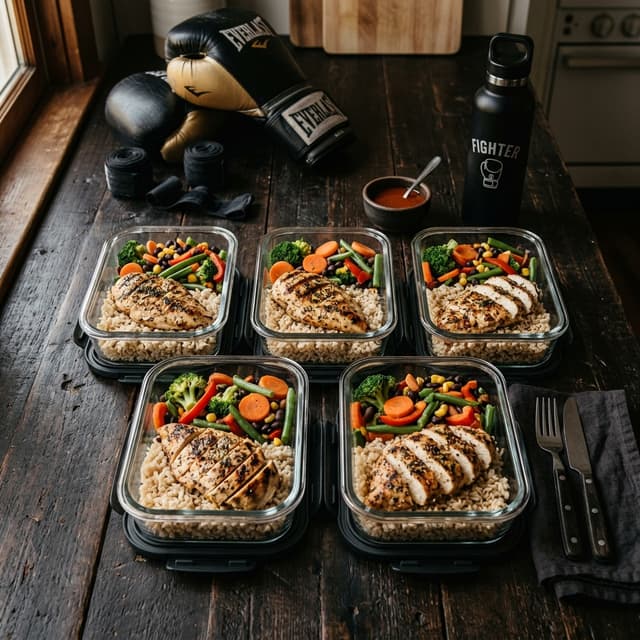
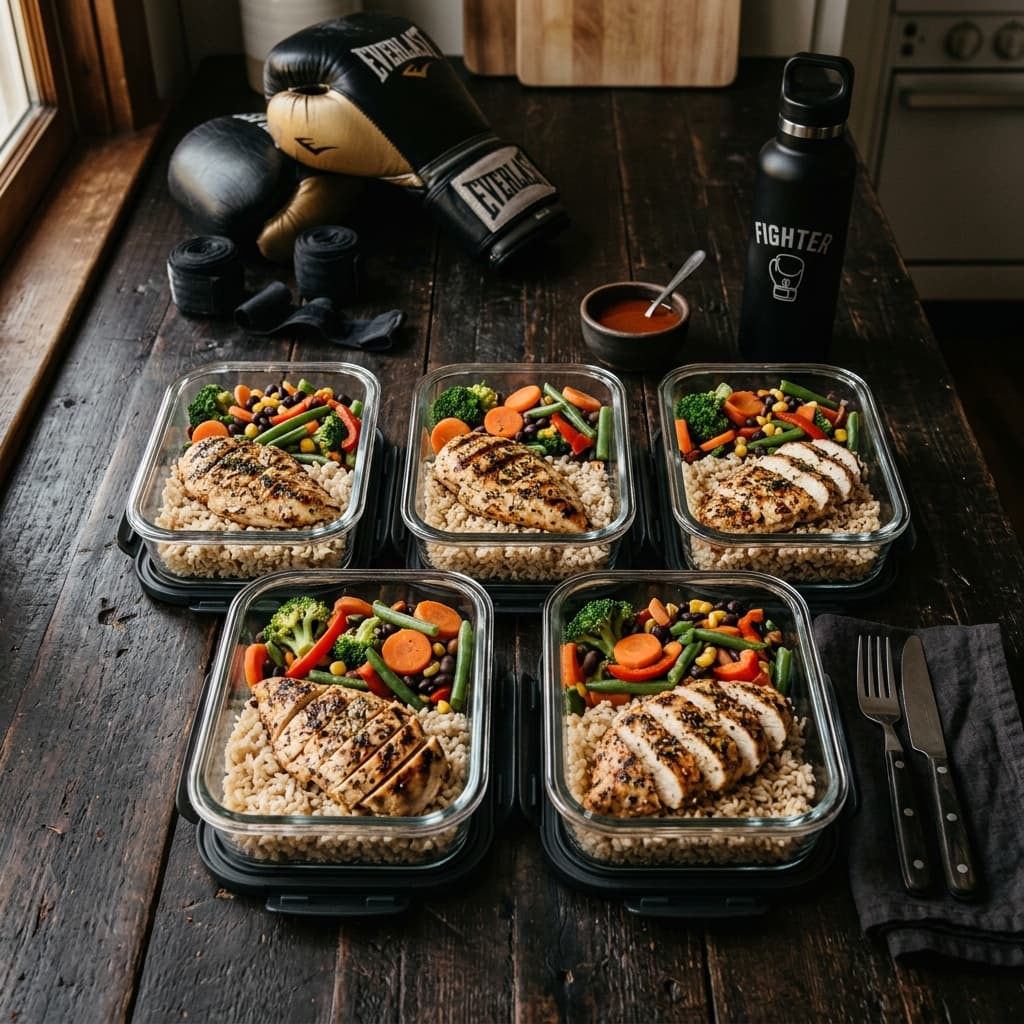
Within 30-60 minutes post-training, consume a meal or shake with a 3:1 or 4:1 ratio of carbohydrates to protein. For a 160-pound fighter, that looks like roughly 60-80g of carbs and 20-30g of protein. White rice with chicken, a banana with a protein shake, or oatmeal with Greek yogurt all work.
Don't skip carbs. This is where fighters cutting weight go wrong. Glycogen depletion leaves you sluggish, slows reaction time, and increases injury risk. Even during a cut, your post-training meal should include carbohydrates. Adjust calories elsewhere in the day if needed.
Anti-inflammatory foods should be staples in a boxer's diet. Tart cherry juice has solid research behind it for reducing exercise-induced muscle damage. Fatty fish (salmon, sardines) provide omega-3s that combat chronic inflammation. Turmeric with black pepper — the piperine increases curcumin absorption by 2,000%.
Avoid alcohol post-training. Even moderate drinking suppresses muscle protein synthesis by up to 37% and disrupts sleep architecture. If you're serious about boxing, save drinking for the off-season — or cut it entirely.
Active Recovery Protocols
Rest days don't mean sitting on the couch all day. Active recovery maintains blood flow to damaged tissues, clears metabolic waste products, and keeps your joints mobile without adding training stress.
Light shadow boxing at 30-40% intensity for 3-4 rounds is one of the best active recovery tools for fighters. You're not throwing power shots. You're moving through positions, keeping your rhythm, and staying mentally connected to your craft. Think of it as meditation with gloves.
Low-intensity roadwork — a 20-30 minute walk or very light jog — promotes circulation without taxing your central nervous system. Usyk is known for incorporating long walks on recovery days rather than complete inactivity.
Additional active recovery methods:
Swimming: zero-impact, full-body movement that decompresses the spine
Yoga or mobility flows: 15-20 minutes targeting hips, shoulders, and thoracic spine
Foam rolling: spend 2-3 minutes per muscle group, focusing on quads, IT band, lats, and calves
Contrast showers: alternate 30 seconds cold / 2 minutes hot for 3-4 cycles. Improves circulation and reduces perceived fatigue
Light cycling on a stationary bike: 15-20 minutes, keep heart rate under 120 BPM
Common Boxing Injuries and Prevention
Hand fractures are the most common boxing injury. The metacarpal bones (especially the 4th and 5th) absorb enormous force with every punch. Prevention starts with proper hand wrapping — 180-inch wraps, figure-eighting between fingers, and reinforcing the knuckles. Always wrap before hitting any bag. Beyond wrapping, learn to land with the first two knuckles (index and middle finger). Punches landing on the ring and pinky knuckles — the "boxer's fracture" zone — account for the majority of hand injuries.
Shoulder impingement develops from repetitive overhead motions and the rounded-shoulder posture fighters adopt behind the guard. Your rotator cuff gets pinched between the humerus and acromion. Band pull-aparts, face pulls, and external rotation exercises should be in every boxer's warmup. Manny Pacquiao dealt with chronic shoulder issues that ultimately required surgery — largely attributed to the cumulative stress of throwing millions of punches over decades.
Wrist sprains happen when the wrist isn't properly aligned on impact. Your wrist should be straight — not bent up, down, or sideways — at the moment of contact. Heavy bag work with sloppy form is the primary culprit. If your wrists hurt after bag work, check your wrapping technique and your punch alignment before anything else.
Knee injuries from pivoting on planted feet, especially on sticky gym floors. Keep your feet light. Pivot on the ball of the foot, never the heel. Replace worn-out boxing shoes — traction that's too grippy increases rotational stress on the knee.
Strengthen the small muscles: rice bucket exercises for hands and wrists, 3x per week
Band work for shoulders: external rotations, pull-aparts, YTWs — 2-3 sets before every session
Don't ignore pain. Sharp pain is your body's emergency signal. Dull aches that persist for 3+ days need attention
Ice acute injuries for 15-20 minutes, 3-4 times per day for the first 48 hours
Invest in quality hand wraps and replace them when they lose elasticity
Overtraining: Recognizing the Signs
Overtraining syndrome is real and it will destroy your progress faster than any opponent. Your body has a limited capacity to recover from stress. Exceed that capacity repeatedly, and performance doesn't just plateau — it actively declines.
Warning signs of overtraining:
Resting heart rate elevated 5-10 BPM above your baseline for multiple consecutive days
Persistent fatigue that doesn't improve with a night of good sleep
Decreased punch speed and power — you feel slow and heavy in the ring
Irritability, mood swings, or loss of motivation to train
Frequent illness — overtraining suppresses immune function
Insomnia despite physical exhaustion
Lingering soreness that lasts 3+ days after a normal session
Increased perceived effort — your usual 6-round session feels like 12
Hydration Science and When to Push Through
Dehydration of just 2% body weight reduces boxing performance measurably — decreased power output, slower reaction time, and impaired cognitive function. Fighters who cut weight aggressively often step into the ring already compromised.
Daily hydration targets for a training fighter: 0.5-1 ounce of water per pound of body weight, plus an additional 16-24 ounces for every hour of training. Add electrolytes (sodium, potassium, magnesium) during sessions lasting longer than 60 minutes. Plain water isn't enough when you're sweating heavily — you need to replace what you're losing.
Monitor your urine color. Pale yellow means adequately hydrated. Dark yellow or amber means you're behind. First thing in the morning is the best time to check.
When to push through vs. when to rest is the hardest judgment call in training. General rule: muscle soreness is okay to train through. Joint pain is not. If something feels "off" in a joint — a click, a catch, a sharp twinge — shut it down. You can always make up a training day. You can't undo a torn ligament.
If you've had three bad sessions in a row — slow, heavy, unmotivated — take two full days off. Not active recovery. Full rest. Sleep, eat, hydrate. When you come back, you'll almost always feel significantly better. Canelo's team builds deload weeks into every camp where training volume drops by 40-50%. It's not laziness. It's science. The fighters who last the longest in this sport are the ones who master the balance between work and recovery.
See these techniques broken down by featured creator Coach Josh.
Build a complete training and recovery plan with our structured course
The Boxing Blueprint is a 4-part video course covering fundamentals, conditioning, footwork, and fight strategy.
View The Boxing BlueprintReady to Practice?
Put what you learned into action with a guided shadowboxing session or timed heavy bag workout.