What Size Gloves Do You Need?
Boxing gloves are measured in ounces, and the weight refers to the total amount of padding in the glove — not the weight of the leather or other materials. The standard sizes are 12oz, 14oz, and 16oz, though competition gloves come in 8oz and 10oz for professionals.
For bag work and pad work, 12oz or 14oz gloves are common. The lighter weight lets you work on speed and feel the impact of your punches more directly. For sparring, most gyms require 16oz because the extra padding protects both you and your training partner — the additional four ounces of foam between your knuckles and their face makes a meaningful difference in impact absorption.
Body weight matters here too. If you weigh under 130 pounds, 14oz sparring gloves may be appropriate. Between 130-175 pounds, 16oz is standard. Over 175 pounds, some gyms require 18oz for sparring, though these are less common. The extra weight builds shoulder endurance as a bonus — three rounds of shadow boxing in 16oz gloves will have your deltoids burning, which translates to better stamina when you drop to lighter competition gloves.
If you are buying one pair to start with, get 16oz. They work for everything — bag work, pad work, sparring, and general training. You will develop better habits with heavier gloves because they force you to keep your hands up. Lighter gloves let beginners get lazy with their guard because the weight is not pulling their hands down, which builds bad defensive habits.
Professional fighters like Canelo Alvarez train almost exclusively in 16oz gloves and only switch to lighter competition gloves (typically 10oz at middleweight) for fight week. The transition from heavy training gloves to light fight gloves makes everything feel faster and sharper on fight night.
Velcro vs. Lace-Up
Velcro closures let you put gloves on and take them off by yourself in seconds. Lace-up gloves provide a tighter, more secure fit but require another person to lace them — and ideally someone who knows what they are doing, because improperly laced gloves can restrict blood flow or shift during training.
For training, velcro is the practical choice. You will be putting gloves on and taking them off multiple times per session — between rounds for water, to adjust hand wraps, to switch to different equipment. Having to find someone to unlace you every time is impractical and disruptive. Every professional gym keeps velcro training gloves as the default for daily work.
Lace-up gloves are used in professional fights because they provide a custom-molded fit that cannot shift or come loose during a bout. The lacing distributes pressure evenly across the wrist and forearm, and the glove essentially becomes part of your hand. Advanced fighters who spar frequently sometimes prefer lace-ups for their feel and wrist support — but they are training in gyms with cutmen or training partners who can lace them properly.
There is a hybrid option worth knowing about: lace-up gloves with a velcro conversion strap. Companies like Rival make lace-up gloves that include a velcro strap over the lacing, letting you tighten them yourself while still getting much of the lace-up fit. These are a good middle-ground option once you have been training for six months or more and want to upgrade.
Start with velcro. You can always add lace-ups later when you know what you prefer and have training partners who can help you gear up.
What to Look For
Beyond size and closure type, these are the qualities that matter when choosing your first pair. Not all gloves at the same price point are created equal — the differences come down to construction details that are easy to check in person or research online.
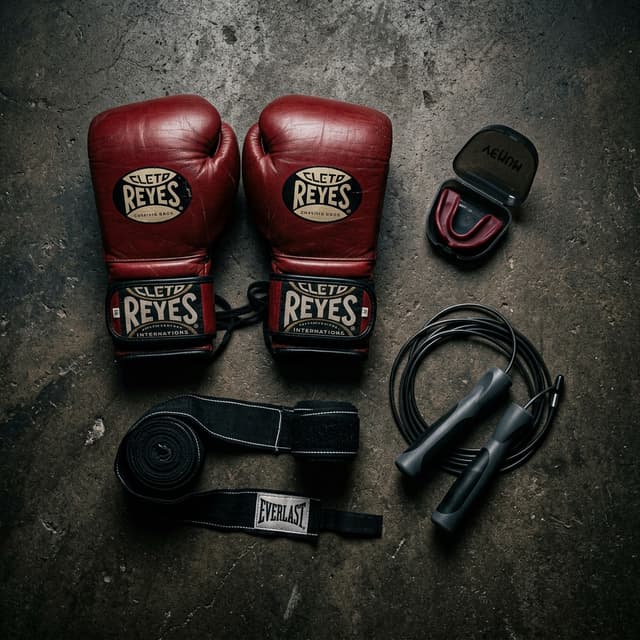
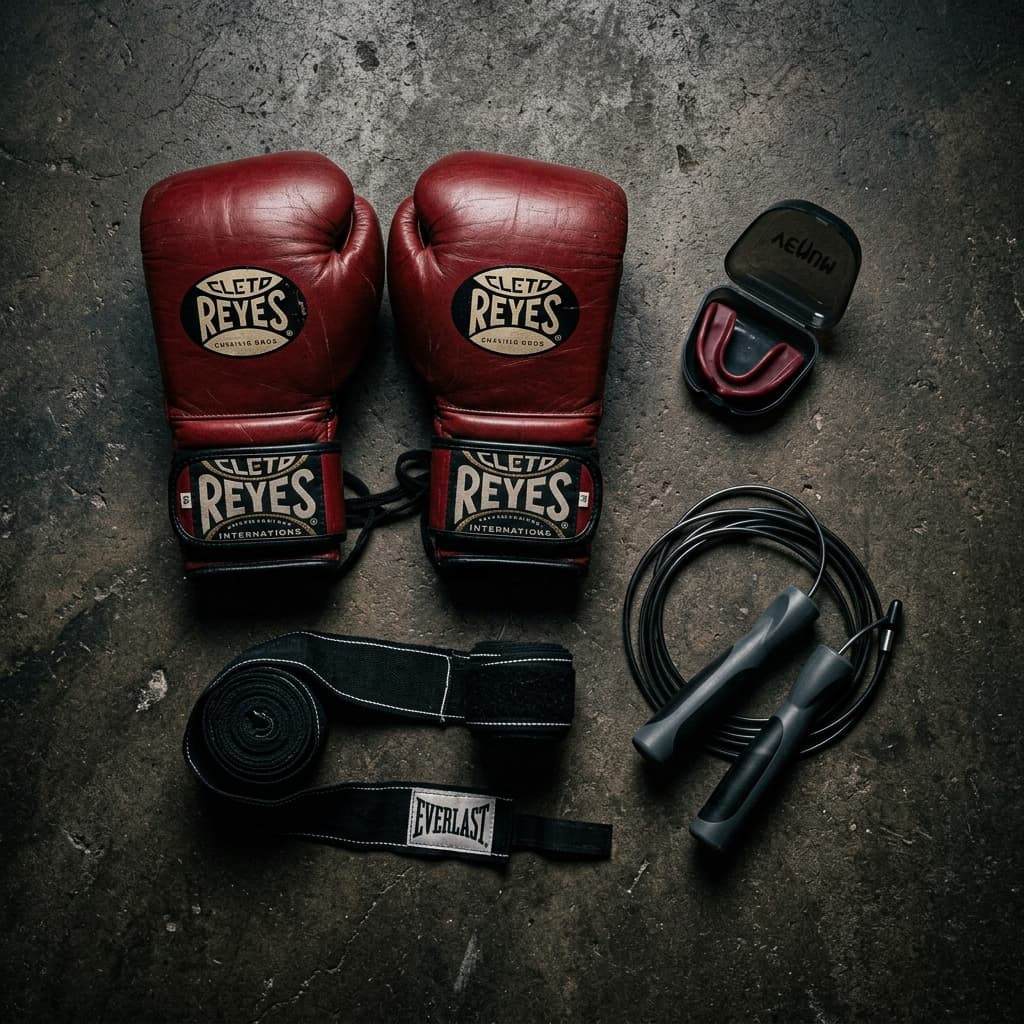
Wrist support: The glove should hold your wrist straight and stable when you make a fist and throw a punch. A floppy wrist inside a glove is a recipe for sprains and fractures. Test this by making a fist inside the glove and pressing the knuckle area against a wall — your wrist should not bend backward. Gloves with longer cuffs (the part that extends past the wrist) generally provide better support. Cleto Reyes gloves, for example, have shorter cuffs and less wrist support by design because professional fighters want more freedom of movement — beginners need the opposite.
Thumb attachment: The thumb should be attached to the glove body (not floating free) to prevent thumb sprains and accidental eye pokes. This is called an "attached thumb" or "connected thumb" design. Nearly all modern training gloves use this design, but some vintage-style or budget gloves still have floating thumbs. Avoid them — a thumb sprain can keep you out of training for weeks.
Padding distribution: Good gloves have firm, layered padding across the knuckles (where impact force is concentrated) and softer padding elsewhere. This is typically achieved through multi-layer foam — an inner layer of softer foam for comfort and an outer layer of denser foam for impact distribution. Cheap gloves use uniform soft foam that compresses flat within weeks of regular bag work, leaving your knuckles hitting through a thin layer of collapsed material. Press on the knuckle padding of a new glove — it should feel firm and resilient, not squishy. Winning gloves, considered the gold standard, use a proprietary foam that retains its shape for years.
Ventilation: Your hands will sweat — there is no avoiding it. Mesh panels or perforated palms help airflow, but no glove stays dry during a hard session. The ventilation factor matters more for training longevity than comfort — gloves that trap moisture develop bacteria and smell terrible within weeks. Look for open-palm designs or mesh inserts, and always air your gloves out after every session. Glove deodorizers (cedar inserts or antibacterial sprays) extend the life of any glove significantly.
Brands Worth Considering
At the entry level ($50-80), Venum Elite, Everlast (the Elite Pro Style or PowerLock series — not the basic department store line, which uses inferior foam and construction), and Hayabusa S4 all make reliable training gloves that will last six months to a year of regular use. These gloves use decent multi-layer foam, have adequate wrist support, and come in 16oz options for sparring. The Everlast you buy at a sporting goods store for $25 is not the same product as the Everlast Elite — the difference in padding quality alone justifies the higher price.
For a step up ($100-150), Ringside Apex, Rival RS1, and Title Gel World offer significantly better padding, leather quality, and construction durability. These are the gloves you will see most frequently in serious boxing gyms, worn by committed amateurs and regional-level professionals. They typically last one to two years with regular use.
At the premium level ($150-300), Cleto Reyes, Winning, and Rival RS2V make the gloves used by professional fighters in training camps. Winning gloves from Japan are widely considered the best sparring gloves ever made — their foam is softer on impact while providing more protection, which sounds contradictory but works through superior engineering. Cleto Reyes from Mexico are known as "puncher's gloves" because their firmer, more compact padding lets you feel the impact more directly — they are excellent for bag work but some sparring partners dislike being hit with them.
But premium gloves are not necessary when you are starting out. A solid mid-range pair will serve you well for your first year or more. Spending $200 on gloves before you know whether you prefer bag work, sparring, or fitness boxing is premature. Let your training preferences guide your upgrade decisions.
What You Do Not Need Yet
You do not need competition gloves. You do not need 8oz gloves. You do not need multiple pairs for different activities. The boxing equipment market is designed to make you think you need more gear than you actually do, and beginners are especially susceptible to over-buying.
Your starter kit: one solid pair of 16oz training gloves with velcro closure, a set of 180-inch hand wraps (get at least two pairs so one can dry while you use the other), and a mouthguard. The mouthguard is non-negotiable even for bag work — accidents happen, and protecting your teeth costs $10 at a sporting goods store versus thousands at a dentist.
That is it. Everything else can wait until you know what kind of training you enjoy and what your gym requires. Some gyms have specific glove requirements for sparring (certain brands, minimum ounce weights). Some gyms provide shared gloves for beginners to try before buying. Ask your coach before spending money.
What about bag gloves? Dedicated bag gloves (lighter, less padded, designed for heavy bag work) are a nice luxury after six months of training, but your 16oz training gloves work fine on the bag. The extra padding actually protects your hands better during the learning phase when your technique — and therefore your wrist alignment on impact — is still inconsistent.
What about MMA gloves? If you are training boxing, use boxing gloves. MMA gloves have open fingers and significantly less padding, which changes the mechanics of punching and provides inadequate protection for boxing-specific training. They serve a different purpose entirely.
See these techniques broken down by featured creator Coach Josh.
Start training with the right equipment foundation
The Boxing Blueprint is a 4-part video course covering fundamentals, conditioning, footwork, and fight strategy.
View The Boxing BlueprintReady to Practice?
Put what you learned into action with a guided shadowboxing session or timed heavy bag workout.