Why Hand Wraps Are Non-Negotiable
Your hand contains 27 small bones, plus a network of tendons, ligaments, and tiny joints that were designed for gripping, not for slamming into heavy objects at high speed. When you throw a punch at a heavy bag or someone's head, those bones absorb serious force — anywhere from 400 to 700 pounds of impact force for a trained boxer.
Hand wraps compress everything together so your bones act as a single unit rather than individual pieces that can shift and fracture on impact. Think of the difference between dropping a handful of loose sticks versus a tightly bundled bundle — the bundle absorbs impact without breaking because the force distributes across the entire structure. That is exactly what hand wraps do for your metacarpals and carpals.
They also stabilize your wrist, preventing it from bending at bad angles on impact. A hyperextended wrist on a hard cross can sideline you for weeks. Keith Thurman fought with a recurring hand injury for years, and Manny Pacquiao has spoken about the importance of proper wrapping after breaking his hand early in his career. Even with perfect technique, the forces involved in punching demand external support.
Beyond protection, wraps absorb sweat inside the glove, extending the life of your gloves and reducing bacterial buildup. A glove without wraps underneath becomes a breeding ground for bacteria within weeks.
No gym will let you touch a bag without them. For good reason — a hand injury is the most common injury in boxing, and the most preventable.
What You Need
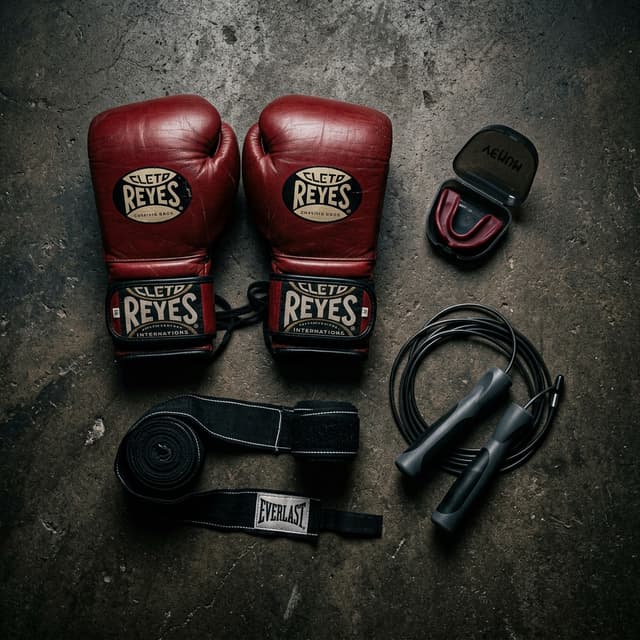
Use 180-inch semi-elastic cotton hand wraps. These are commonly called "Mexican-style" wraps because they have a slight stretch that helps them conform to the contours of your hand — the gaps between your knuckles, the curve of your wrist, the fleshy area between thumb and index finger. The stretch ensures a snug fit without the bulk that rigid cotton wraps can create.
Avoid the short 108-inch wraps — they do not provide enough material to cover both the knuckles and wrist properly. You will end up choosing between protecting your knuckles or supporting your wrist, and in boxing you need both. For fighters with larger hands, 200-inch wraps exist and provide extra coverage.
Your wraps should have a thumb loop at one end (this anchors the wrap so it does not unravel during training) and a velcro closure at the other (to secure the final pass). Some wraps have a small "this side down" label near the thumb loop — this indicates which surface should sit against your skin for maximum comfort.
Gel-padded inner gloves are sold as a quick alternative to traditional wraps. They offer some knuckle padding but significantly less wrist support than properly applied hand wraps. Use them for light bag work if you are in a rush, but for sparring or serious sessions, always use full-length wraps. Professional fighters never use gel gloves in training — there is a reason for that.
Wash your wraps after every session. Roll them up neatly when dry so they are ready for your next workout. Wrinkled, bunched-up wraps create uneven pressure points inside the glove that can cause blisters.
The Standard Wrapping Method
There are dozens of wrapping styles — trainers in every gym have their preferred method, and professional fighters often develop personalized wrapping patterns with their cutmen. This is the most widely used method for training, and it balances knuckle protection with wrist support without being overly complicated. Once you learn it, wrapping takes about 90 seconds per hand.
Start by looping the thumb loop over your thumb, with the wrap going across the back of your hand (not the palm). The wrap should unroll off the top of your hand — this ensures it tightens when you make a fist rather than loosening.
Wrap around the wrist three times — firm, but not so tight that your hand goes numb or your fingers tingle. The wrist is your foundation. These three passes create a rigid column that prevents your wrist from bending on impact. If your wrist folds when you punch the heavy bag, add a fourth pass here.
Come up across the back of the hand diagonally to the knuckles. This diagonal pass connects the wrist support to the knuckle padding.
Wrap across the knuckles three times, covering all four knuckle heads (index through pinky). These passes should sit flat against each other, not bunched. The knuckle padding is what absorbs the impact of every punch — skimping here is asking for bruised or fractured metacarpals.
Go between each finger (pinky to ring, ring to middle, middle to index), returning to the wrist between each pass. These "X" patterns between the fingers spread the metacarpal bones slightly and lock them in place, preventing them from collapsing together on impact. This step is what separates a proper boxing wrap from simply wrapping a bandage around your hand.
Cover the knuckles one more time with the remaining material, then wrap across the back of the hand. This final knuckle pass compresses the between-finger wrapping and creates a dense protective pad over the striking surface.
Finish around the wrist and secure with the velcro closure. The velcro should sit on the inside of the wrist (palm side) where it will not catch on the bag or your opponent.
How Tight Should They Be?
Make a fist after wrapping. The wraps should feel snug and secure — your hand should feel like one solid unit, with no individual bones shifting when you squeeze.
Now open your hand flat. You should still be able to spread your fingers without the wraps cutting off circulation. The knuckle padding should stretch slightly but not slide out of position.
If your fingers tingle or turn white, rewrap looser — you are compressing the blood vessels in your hand. If your fingers turn blue, remove the wraps immediately. If the wraps shift around when you punch the heavy bag or you can feel your knuckle bones moving independently inside the glove, rewrap tighter.
A useful test: throw 10 hard crosses at the heavy bag after wrapping. If the wraps feel exactly the same after those 10 punches as they did when you first wrapped, the tension is right. If they have loosened and shifted, they were too loose. If your hand feels numb, they were too tight. You will find the sweet spot after a few tries — most fighters lock in their preferred tension within the first two weeks of training.
One important note: your hands may swell slightly during training as blood flow increases. Wraps that feel perfect at the start of a session may feel slightly tight by round 4. If this happens consistently, wrap very slightly looser than what feels ideal when your hands are cold. The slight swelling will bring them to the perfect tension.
Professional fighters have their hands wrapped by experienced cutmen who have developed a feel for the exact tension over thousands of wrappings. As a beginner, you are your own cutman — and developing that feel is a skill that improves with every session.
See these techniques broken down by featured creator Coach Josh.
Start your boxing journey with the right foundation
The Boxing Blueprint is a 4-part video course covering fundamentals, conditioning, footwork, and fight strategy.
View The Boxing BlueprintReady to Practice?
Put what you learned into action with a guided shadowboxing session or timed heavy bag workout.