Why Beginners Gas Out
Here's the number one reason new boxers can't last three rounds: they hold their breath when they punch. It's instinctive. You tense up, load the shot, and clamp your jaw shut. Within 90 seconds your diaphragm is locked, your shoulders burn, and your brain is screaming for oxygen.
This isn't a cardio problem. Plenty of beginners who can run five miles will gas out hitting the heavy bag for two minutes. The issue is respiratory mechanics under stress. Your body defaults to shallow chest breathing the moment adrenaline spikes. That flight-or-fight response restricts your breathing to the upper chest, cutting your oxygen intake by nearly half.
Watch any amateur fight card and you'll spot it immediately — the fighter mouth-breathing with their hands dropping by round two didn't get out-conditioned. They got out-breathed. Breathing is a skill in boxing, not just a bodily function. And like any skill, it needs deliberate practice.
The Exhale-on-Impact Rule
This is the single most important breathing principle in boxing: exhale sharply every time you throw a punch. Not a gentle breath out — a forceful, short burst of air timed exactly to the moment of impact.
The exhale does three things simultaneously. First, it engages your core at the point of contact, creating a rigid kinetic chain from your feet through your fist. A punch thrown on an inhale has no structural support behind it. Second, it prevents you from holding your breath during exchanges, which is the fast track to gassing out. Third, it keeps your jaw clenched naturally through the contraction of your core muscles, reducing the chance of getting caught with your mouth open.
Listen to any world-class fighter on training footage. You'll hear a sharp "tsss" or "shh" on every punch. Manny Pacquiao's rapid-fire "tss-tss-tss-tss" on combinations is a perfect example. That's not for show. That's eight-division world champion breathing mechanics.
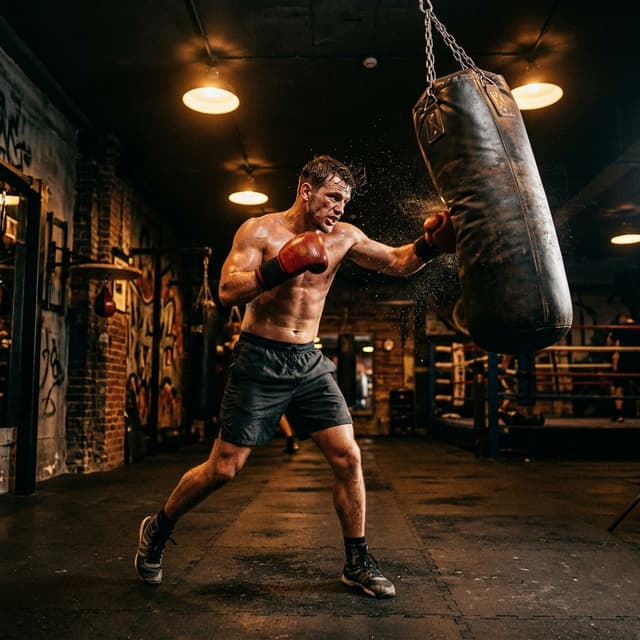
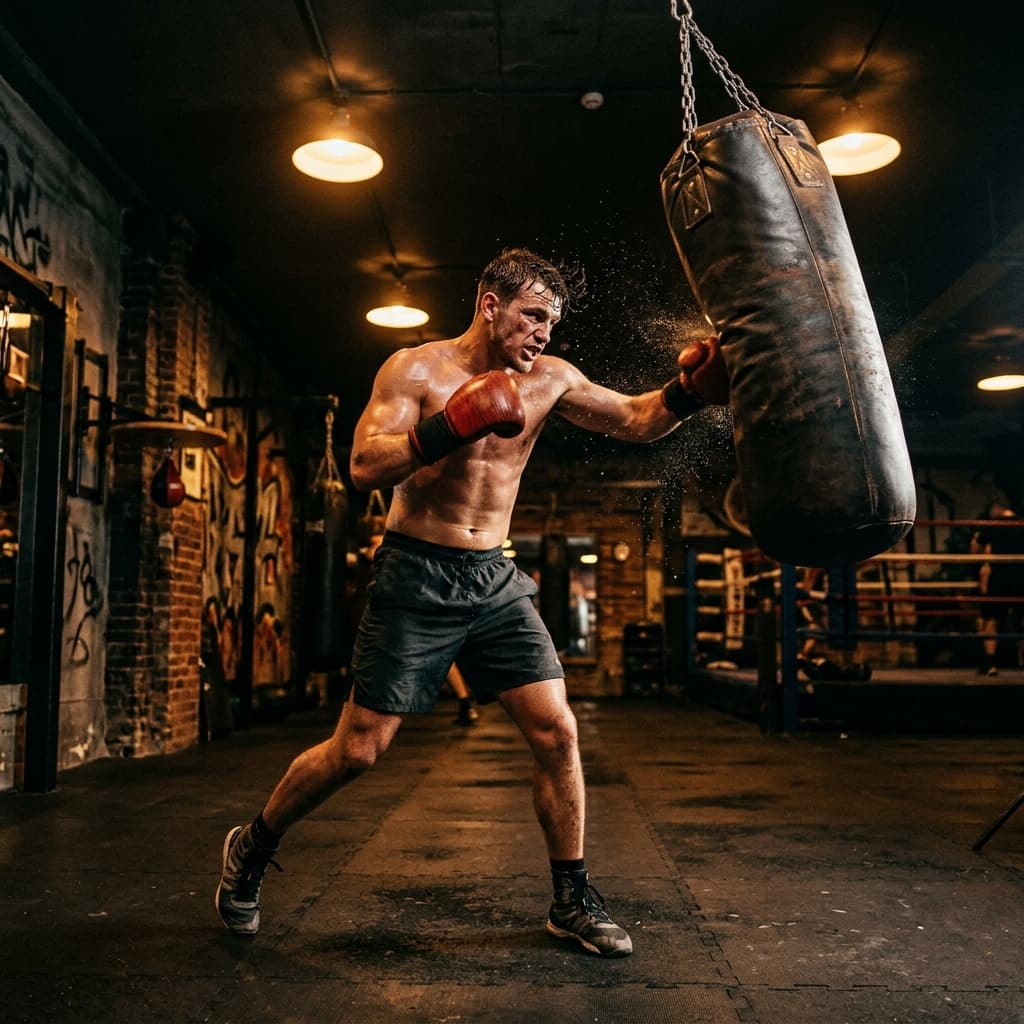
The rule is non-negotiable. Every jab gets an exhale. Every cross gets an exhale. Every hook gets an exhale. No exceptions. Start enforcing this in shadow boxing before you ever touch a bag.
The Hiss Technique and Breathing Sounds
You've heard fighters make noise when they punch. The specific sound matters less than the mechanics behind it. The goal is a controlled, forceful exhale through a partially closed airway — teeth together, lips slightly parted.
The "hiss" technique uses a sharp "tsss" sound created by pressing your tongue against the back of your upper teeth and forcing air through. This naturally limits the volume of air expelled per punch, so you don't empty your lungs on a single jab. Think of it as a pressure valve, not an open faucet.
Some fighters prefer a "shh" sound. Others use a grunt. What doesn't work is a full open-mouthed exhale — that dumps too much air and leaves you gasping after a four-punch combination. You need to ration your breath across an entire exchange.
Here's a practical drill: throw a six-punch combination on the heavy bag — jab, cross, lead hook, cross, lead hook, cross. Use one breath cycle. Exhale in six short bursts, one per punch, all from the same inhale. If you run out of air by punch four, you're expelling too much per shot. Tighten the hiss.
"Tsss" — tongue against upper teeth, most common and easiest to learn
"Shh" — lips pursed, slightly more air per exhale, good for power shots
"Huh" — guttural exhale, used by many Mexican-style fighters on body shots
Avoid full open-mouth exhales — they dump too much air per punch
Rhythmic Breathing for Different Situations
Single punches are simple: inhale between shots, exhale on impact. A jab-return-jab rhythm gives you plenty of time to breathe. The challenge starts with combinations.
For a standard one-two, take one inhale before the jab, then exhale twice — once on the jab, once on the cross. For longer combinations of four to six punches, you'll take one deep inhale, then parcel out your exhale across all the shots. This is why the hiss technique matters — it lets you stretch one breath across multiple punches.
During defensive sequences, your breathing pattern shifts. When you're slipping and rolling under punches, breathe in short sips through the nose. Don't hold your breath while bobbing and weaving — that's a guaranteed way to tire yourself out without even throwing. Many fighters develop a rhythm of slight nasal inhales during head movement, then sharp exhales when they counter.
In the clinch, breathing becomes recovery time. This is where experienced fighters like Floyd Mayweather excel. While tying up an opponent, Mayweather would take deep, controlled breaths through the nose, lowering his heart rate while his opponent struggled and wasted energy trying to wrestle free. The clinch isn't just tactical — it's a breathing reset.
Between rounds, sit down, breathe deeply through the nose, exhale slowly through the mouth. Four-count inhale, six-count exhale. This activates your parasympathetic nervous system and brings your heart rate down faster than gasping through your mouth.
Nasal vs. Mouth Breathing: When to Use Each
There's a lot of noise in the fitness world about nasal breathing. Here's the boxing-specific truth: use your nose when you can, your mouth when you must.
During low-intensity phases — circling the ring, resetting distance, feinting — breathe through your nose. Nasal breathing filters and warms the air, produces nitric oxide that improves oxygen absorption, and naturally limits your breathing rate so you don't hyperventilate. It also keeps your jaw closed, which is exactly where it should be when someone's trying to punch it.
During high-output exchanges — throwing combinations, fighting off the ropes, scrambling out of trouble — your mouth opens and that's fine. Your oxygen demand exceeds what nasal breathing can deliver. Trying to force nose-only breathing during a firefight is like trying to fill a swimming pool through a garden hose.
The key is switching back to nasal breathing the moment intensity drops. Most fighters stay in mouth-breathing mode for the entire round once it opens up. That leads to hyperventilation, CO2 depletion, and the light-headed feeling that makes your legs go wobbly. Train yourself to close your mouth and return to nasal breathing within two to three seconds of disengaging.
Muhammad Ali was a master of this. Watch his fights — during the long stretches where he's on the back foot, circling, his mouth is closed. He's breathing through his nose, conserving energy, looking completely relaxed. Then he'd explode with combinations, mouth open, sharp exhales, before immediately resetting to that calm nasal rhythm. That composure wasn't just mental. It was respiratory.
Training Your Respiratory Muscles
Your diaphragm, intercostals, and accessory breathing muscles respond to training just like your biceps or calves. Stronger respiratory muscles mean more efficient oxygen delivery and faster recovery between exchanges.
Here are the most effective drills for boxing-specific respiratory conditioning:
Diaphragmatic breathing sets — lie on your back, place a weight plate (5-10 lbs) on your stomach, breathe deeply pushing the plate up on inhale, control it down on exhale. 3 sets of 20 breaths.
Shadow boxing with nasal-only breathing — forces you to moderate your output and find sustainable pacing. Do 3 rounds.
Heavy bag intervals with breath counting — throw 10-punch combinations and count your exhales. If you can't match exhales to punches, slow down until you can.
Sprint-breathe-sprint — run 50 yards, immediately throw a 30-second combination on the bag, focus on controlled breathing, repeat 6 times.
Breath hold recovery — after a hard round, see how quickly you can return to a resting breathing rate. Time it. Train to beat your number.
Jump rope nasal breathing — skip rope for 3-minute rounds breathing only through your nose. This builds massive respiratory endurance.
How Elite Fighters Weaponize Breathing
At the highest level, breathing becomes a psychological weapon. Floyd Mayweather would walk to his corner between rounds looking like he'd just gotten out of bed — mouth closed, breathing through his nose, zero visible distress. His opponents, meanwhile, were gulping air. That visual contrast demoralizes a fighter more than any single punch.
Mayweather's secret wasn't superhuman lungs. It was efficiency. He rarely wasted punches, rarely engaged in exchanges he didn't initiate, and used the clinch as a breathing station. Every tactical choice served his respiratory economy.
Vasiliy Lomachenko's footwork serves the same purpose. By constantly angling and repositioning, he forces opponents to reset, giving himself micro-recovery windows. He's breathing while they're adjusting.
Your breathing strategy should match your fighting style. Pressure fighters need to train respiratory endurance for sustained output — think of the breathing demands of a Julio César Chávez body attack. Counter-punchers need fast recovery between bursts — short, explosive exchanges followed by immediate return to nasal breathing.
Start treating breathing as seriously as you treat your jab. Build it into every shadow boxing round. Monitor it during bag work. Pay attention to it in sparring. The fighter who breathes better, fights longer. And in boxing, the fighter who can sustain output in the championship rounds is usually the one who gets their hand raised.
See these techniques broken down by featured creator Coach Josh.
Build championship-level endurance with our conditioning course
The Boxing Blueprint is a 4-part video course covering fundamentals, conditioning, footwork, and fight strategy.
View The Boxing BlueprintReady to Practice?
Put what you learned into action with a guided shadowboxing session or timed heavy bag workout.