What Makes a Good Guard
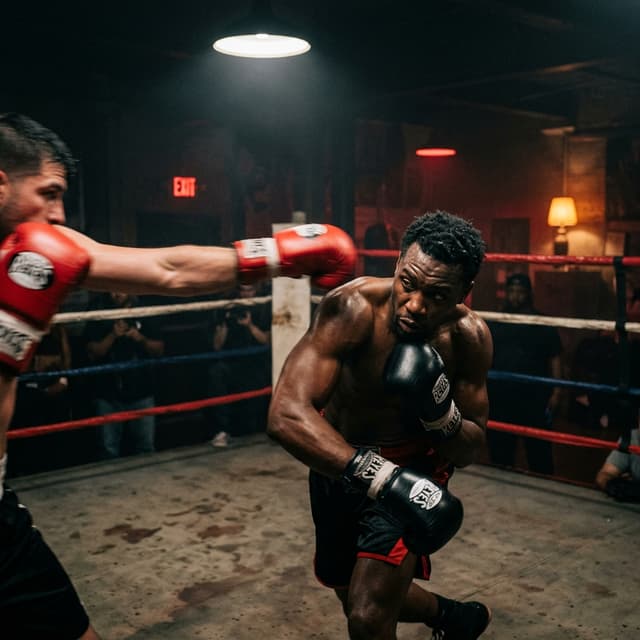
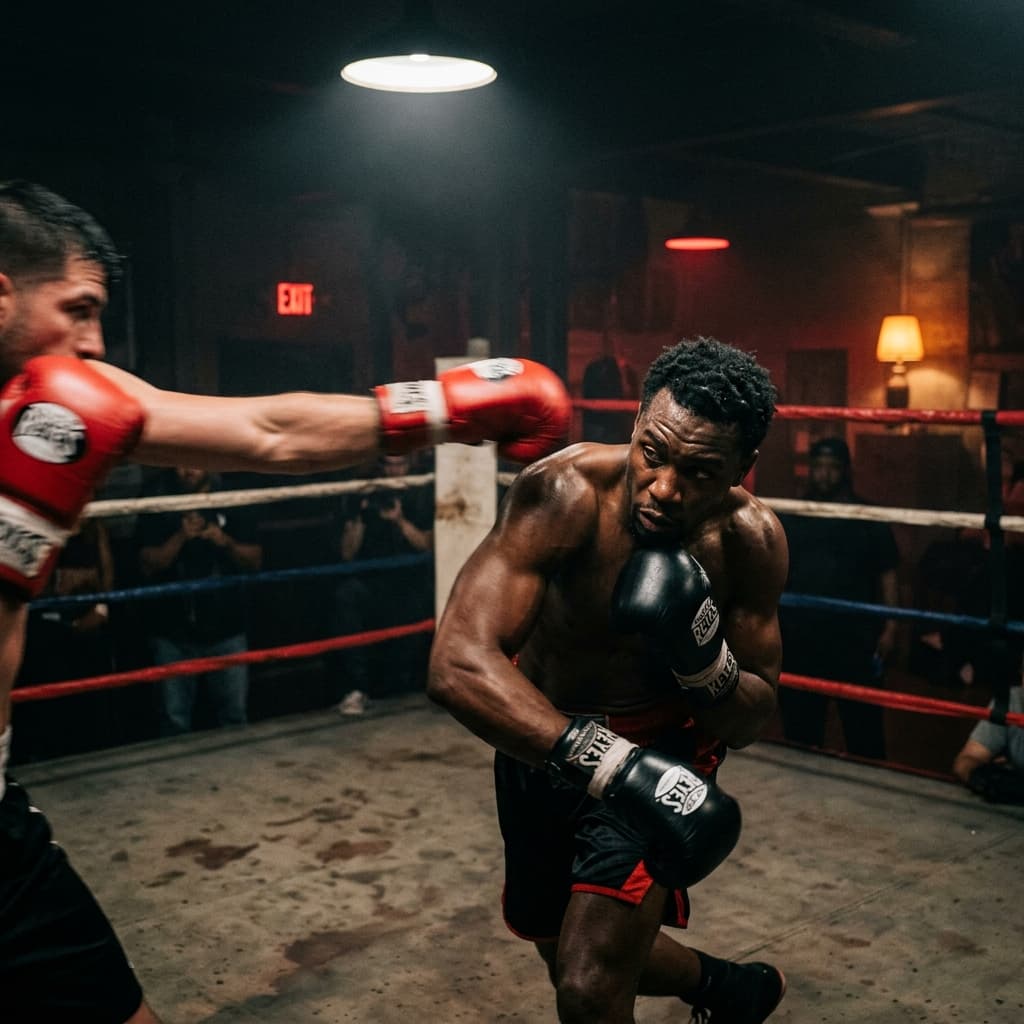
A guard does two things simultaneously: it protects you from incoming punches, and it positions your hands to fire back immediately. Any guard that accomplishes only one of these is incomplete — pure defense without counter-punching ability makes you a sitting target, while offensive readiness without protection gets you knocked out.
The best guard is one that keeps you safe while letting you counter without resetting your hands. Biomechanically, this means your hands are positioned along the punching lanes — the straight lines between your fists and the opponent's head and body — so that defense and offense share the same hand positions. When your guard is correct, throwing a punch is a small adjustment, not a complete reorganization.
There is no single "correct" guard. The right one depends on your style (pressure fighter vs. counter-puncher vs. boxer), your body type (tall and rangy vs. short and stocky), your opponent's tendencies, and the specific moment in the fight. Winky Wright used a tight, textbook high guard that made him almost impossible to hit cleanly but limited his offensive output. Prince Naseem Hamed used an unorthodox low guard with his hands at his waist, relying entirely on reflexes and angles. Both approaches worked — for those specific fighters, with their specific attributes.
The Classic High Guard
This is the guard most coaches teach first, and for good reason — it is the most fundamentally sound and most forgiving defensive position in boxing.
Both hands sit at cheekbone height, elbows tucked tight against the ribs. The lead hand is slightly forward, the rear hand presses against the cheek with the chin tucked behind it. This configuration covers your chin and your liver simultaneously — the two targets that end fights most frequently.
Biomechanically, the high guard works because it places barriers along the most common attack angles. Straight punches (jabs and crosses) are blocked by the gloves. Hooks are caught by the gloves or forearms. Body shots are absorbed by the elbows. You do not need to *react* to every punch — many are blocked passively by the guard's structure. This is why it is the most forgiving guard for beginners whose reaction time and defensive instincts are still developing.
Winky Wright built a Hall of Fame career behind one of the tightest high guards in boxing history. Against opponents like Shane Mosley and Felix Trinidad, Wright's guard was so impenetrable that elite punchers spent entire fights unable to land clean shots. Joshua Clottey used a similar approach — an extremely tight high guard that made him a nightmare to score on, even against Manny Pacquiao.
The trade-offs are real: limited visibility (your gloves partially obstruct your peripheral vision), reduced offensive angles (throwing punches from the high guard position requires slightly more setup than from a lower, more open stance), and the energy cost of holding your hands at face height for extended periods. Your shoulders will burn, especially in the later rounds. Build shoulder endurance with extended shadow boxing rounds where you never drop your hands below cheekbone height.
The Peek-a-Boo
Made famous by Mike Tyson under the tutelage of Cus D'Amato, the Peek-a-Boo is one of the most visually distinctive guards in boxing. Both gloves sit directly in front of the face, almost touching, with the forearms creating a wall. You look through the narrow gap between the gloves.
This guard is designed as an integrated offensive-defensive system, not just a static blocking position. The Peek-a-Boo pairs with aggressive, rhythmic head movement — constant slipping, weaving, and bobbing that makes the fighter a moving target even while advancing. The high hand position means you are always loaded to throw short, devastating hooks and uppercuts the moment you slip inside.
It works best for shorter, compact pressure fighters who want to get inside longer opponents' reach and throw combinations at close range. Tyson was 5'10" fighting heavyweights who were often 6'2" or taller. The Peek-a-Boo let him slip their jabs by weaving underneath and then explode upward with hooks and uppercuts from angles his opponents could not see. The guard naturally positions the hands for those close-range power shots.
Biomechanically, the Peek-a-Boo keeps your weight slightly forward on the balls of your feet, which facilitates the explosive forward movement the style demands. Your knees stay bent deeper than in a standard stance, lowering your center of gravity for the weaving motions.
The trade-off: it demands constant energy and head movement. You cannot be lazy or static in the Peek-a-Boo — without the head movement component, you are just standing in front of your opponent with your hands blocking your own vision. If your head stays still, opponents learn to time their punches between your gloves. Floyd Patterson, who also used the Peek-a-Boo under D'Amato, was criticized for occasionally becoming too static in the guard, which led to devastating knockdowns against opponents like Sonny Liston.
The Philly Shell (Shoulder Roll)
Perfected by Floyd Mayweather Jr. — though pioneered by fighters like James Toney and Pernell Whitaker — the Philly Shell is boxing's most technically demanding defensive guard. The lead hand drops low, resting against the hip or lower ribcage. The rear hand stays glued to the cheek. The lead shoulder is raised and rolled forward to deflect incoming jabs and straight punches.
The mechanics are precise: when a jab comes, you roll the lead shoulder up to deflect it while simultaneously pulling your head slightly back and to the side. The punch slides off the shoulder's curved surface rather than landing flush. Immediately after the deflection, your lead hand — already positioned low — fires a check hook or body shot as a counter. The rear hand stays home protecting the chin throughout.
This guard requires excellent reflexes, timing, and distance management. You are using your shoulder and upper arm as a shield rather than your gloves, which means you are relying on movement and positioning rather than barriers. When it works, it is beautiful — Mayweather made elite fighters look helpless against the shell, rolling punches off his shoulder and countering with perfect right hands that his opponents never saw coming.
James Toney used a more aggressive version of the shell, rolling punches and immediately firing back with vicious counter-hooks. Toney's shell was lower and more exaggerated than Mayweather's, leaving more room for error but creating wider counter-punching angles.
Extremely effective in skilled hands. Dangerous for beginners who do not yet have the defensive instincts and timing to make it work. The lead shoulder roll only protects against straight punches — hooks from the open side catch you flush if you do not pair the roll with head movement. A common mistake is thinking the shell is purely a shoulder position; in reality, it is a complete defensive system that integrates shoulder rolling, pull-counters, head movement, and footwork. Learning the shoulder position alone without the other components is a recipe for getting knocked out.
Cross-Armed Guard
Used primarily for body protection in specific defensive situations. Both arms fold across the midsection with forearms stacked, creating a shield across the liver and solar plexus — the two body targets that cause the most debilitating pain.
You will see this guard when a fighter is being pressured against the ropes and needs to absorb a sustained body attack. George Foreman used it effectively in the later stages of his career, tucking his arms across his body while leaning against the ropes and waiting for opponents to exhaust themselves throwing body shots into the barrier. Foreman's size and durability made this viable — he could absorb the punishment that leaked through and then fire back when his opponent tired.
Archie Moore was another master of the cross-armed guard, using it as part of his famous "turtle shell" defense. Moore would tuck everything tight, let opponents unload on the guard, and then uncork counter shots when they paused. He fought professionally until age 49 and credited this guard with preserving his body through decades of competition.
The trade-off is significant: the cross-armed guard leaves the head somewhat exposed because both hands are committed to body protection. Uppercuts and hooks to the head can land cleanly if the fighter does not complement the guard with head movement and ring positioning. Think of the cross-armed guard as a situational tool for specific defensive moments — absorbing a body barrage on the ropes, recovering from a shot that hurt you, or weathering a storm in a rough round — not a primary guard you carry through an entire fight.
Choosing Your Guard
Start with the classic high guard. It builds the right defensive habits — hands up, elbows in, chin down — that are essential regardless of which guard you eventually adopt. Spend your first 3-6 months of training exclusively in the high guard until it becomes automatic. You should be able to hold it through fatigue, through distraction, and through live sparring without conscious effort.
As your skills develop and you begin to understand range, timing, and your own stylistic preferences, experiment with other guards during controlled sparring. Not during hard sparring where a mistake gets you hurt — during technical rounds where both fighters are working at 50-60% intensity. Try the Philly Shell for one round. See how the Peek-a-Boo feels. Notice which guard suits your body type and temperament.
Most elite fighters switch between guards depending on the moment and the tactical situation. High guard on the outside when jabbing at range. Shell when in counter-punching mode. Peek-a-Boo when pressuring inside. Cross-armed when absorbing a storm. Andre Ward was exceptional at this — he would transition between three or four guard styles within a single round, keeping opponents guessing about where his hands would be.
Your guard should be a conscious tactical choice, not a mindless default. Every guard has strengths and vulnerabilities. When you understand those trade-offs, you can pick the right guard for each moment in a fight — which is, ultimately, what separates a fighter who merely blocks punches from a fighter who uses defense as a weapon.
See these techniques broken down by featured creator Coach Josh.
Master defensive fundamentals in the complete course
The Boxing Blueprint is a 4-part video course covering fundamentals, conditioning, footwork, and fight strategy.
View The Boxing BlueprintReady to Practice?
Put what you learned into action with a guided shadowboxing session or timed heavy bag workout.