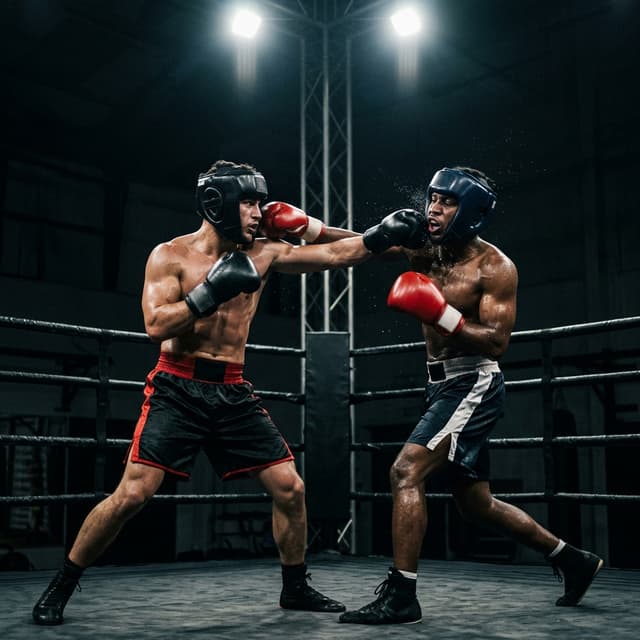
Why Boxing Is Different
Every fitness activity improves how you look. Boxing improves how you carry yourself.
There is a reason that fighters — even retired ones — carry themselves differently. It is not about the muscles. It is about having been tested in a way that most people actively avoid. Knowing you can handle yourself in a confrontation, even a controlled one, changes things fundamentally. It changes the way you walk into a room, the way you handle workplace pressure, the way you respond to aggressive or confrontational people, and the way you process stress.
Mike Tyson once said that the discipline of boxing saved his life — that without the structure of the gym and the confidence it built, he would have self-destructed as a teenager. Manny Pacquiao credits boxing with pulling him out of extreme poverty not just financially, but psychologically — the sport taught him he was capable of extraordinary things before he had any external evidence of it.
This is not about learning to hurt people. The most confident fighters are usually the calmest people in the room. They do not need to prove anything because they have already proven it to themselves in the hardest possible environment. Real confidence is quiet. It does not announce itself. It does not seek confrontation. It simply exists because it has been earned through discomfort, repetition, and honest self-assessment.
The Uncomfortable Growth Zone
Boxing pushes you into discomfort on a regular basis, and that is precisely the mechanism through which it builds confidence. Learning to take a punch. Getting winded in the third round when your lungs are burning and your arms feel like concrete. Standing across from someone who wants to hit you and choosing to engage instead of flee.
None of it is pleasant. That is exactly why it works.
Psychologists call this stress inoculation — controlled exposure to manageable stress that gradually raises your threshold for handling harder situations. Every sparring session is a stress inoculation drill. You learn that getting hit is survivable. You learn that exhaustion does not kill you. You learn that your body can do far more than your mind initially believes.
Every time you push through a hard round, finish a session you wanted to quit, or step into the ring when every instinct is screaming at you to stay out — you build evidence that you can handle hard things. This evidence is not theoretical. It is not an affirmation you recite in a mirror. It is lived experience, and it accumulates fast.
Bernard Hopkins fought professionally until age 51, and he often talked about how each training camp — each period of deliberate suffering — reinforced his belief in his own resilience. That belief carried over into business, into relationships, into every area of his post-fighting life. The gym was where the evidence was built. Everything else was where it was applied.
The transfer effect is well-documented: people who train boxing regularly report higher stress tolerance in professional settings, greater composure during confrontations, and a reduced tendency toward anxiety. The mechanism is simple — once you have been in a ring, a difficult meeting or a heated argument feels manageable by comparison.
The Skill-Confidence Loop
Competence breeds confidence. This is not a motivational slogan — it is a psychological principle backed by decades of self-efficacy research. When you get better at something difficult, your belief in your ability to handle challenges grows. Boxing provides this feedback loop in uniquely clear, undeniable ways.
When your jab starts landing consistently in sparring, when you slip a punch for the first time and feel it sail past your ear, when you execute a 1-2-3 combination you drilled for weeks and your partner's head snaps back — each of these moments creates a positive feedback loop. You get better. You feel more confident. The confidence makes you train harder and more deliberately. You get better again.
Vasyl Lomachenko's father understood this loop intuitively when he trained young Vasyl. He built skill progressions methodically — footwork first, then single punches, then combinations, then sparring — so that each new challenge was just barely beyond Lomachenko's current ability. Each success at the new level locked in another layer of confidence. By the time Lomachenko reached elite amateur competition, his confidence was unshakeable because it was built on thousands of small competence victories.
This loop extends beyond the gym. People who experience the skill-confidence cycle in boxing start applying the same framework elsewhere. "If I can learn to slip a hook, I can learn to code." The specific skill does not matter — what matters is the proven pattern: effort plus patience equals competence, and competence equals confidence. Boxing makes that pattern impossible to miss.
Discipline Over Motivation
Boxing teaches you something important: motivation is unreliable. It fluctuates with your mood, your sleep, your stress levels, and whether you ate well that day. If you only train when you feel motivated, you will train inconsistently and improve slowly.
There will be days when you do not want to train. Your body will be sore. The weather will be bad. Work will have been brutal. You will go anyway. You will wrap your hands, put on the gloves, and work through the rounds. And after the session, you will feel better than if you had stayed home. Every single time.
Floyd Mayweather is the most obvious example of discipline over motivation in boxing. Mayweather trained obsessively — often starting sessions at 1:00 AM not because he was motivated at that hour, but because he had committed to a schedule and refused to break it. The result was 50-0. That record was built in the gym on nights when motivation was nowhere to be found.
Canelo Alvarez follows a similarly rigid training structure. His camps are famous for their monotony — the same schedule, the same meals, the same bedtimes, week after week. Canelo has spoken about how boring fight camp can be. But he does it anyway, because discipline is the engine. Motivation is just the occasional tailwind.
Boxing builds the discipline habit faster than most activities because the consequences of skipping are immediate and visible. If you skip a week of running, your 5K time might not change noticeably. If you skip a week of boxing training and then spar, everyone in the gym — including you — can see the difference. The accountability is built into the sport.
The Community
A boxing gym has a culture unlike any other fitness environment. Commercial gyms are collections of individuals working out in proximity. Boxing gyms are communities forged through shared struggle.
There is a mutual respect that comes from shared suffering. Everyone in the gym knows what it feels like to be exhausted at the end of round three, to get hit with a shot you did not see, to push through one more round when quitting would be easier. That shared experience creates bonds that transcend the usual social boundaries. You will train alongside people from every background, age, and fitness level — lawyers next to laborers, teenagers next to retirees — all united by the work.
The sparring relationship accelerates this bonding. There is a unique intimacy in controlled combat — you are trusting another person to challenge you without hurting you, and they are trusting you to do the same. That mutual trust, built round by round, creates friendships that are qualitatively different from those formed over coffee or at a networking event.
Many of the greatest fighters credit their gym community as the foundation of their success. Cus D'Amato's gym in Catskill, New York became a second home for young fighters like Mike Tyson, Kevin Rooney, and many others. The Kronk Gym in Detroit produced champions like Thomas Hearns, Hilmer Kenty, and Jimmy Paul — but more importantly, it provided a safe, structured environment for young men who might otherwise have had none.
The gym becomes a second home because it demands the best version of you every time you walk through the door. That combination of accountability, shared hardship, and genuine community is rare. Once you find it, the confidence it builds extends into every other relationship in your life.
See these techniques broken down by featured creator Coach Josh.
Start your boxing journey today
The Boxing Blueprint is a 4-part video course covering fundamentals, conditioning, footwork, and fight strategy.
View The Boxing BlueprintReady to Practice?
Put what you learned into action with a guided shadowboxing session or timed heavy bag workout.