When You Are Ready to Spar
There is no universal timeline, but most coaches agree on a minimum: you should be able to throw basic combinations (1-2, 1-2-3) with decent form, maintain a proper guard, and move with basic footwork. You should understand how to step-drag in all four directions without crossing your feet, and your jab should travel in a straight line without flaring the elbow.
For most people, that takes about 2-3 months of consistent training — attending the gym at least three times per week. Some people with athletic backgrounds pick it up faster; others take longer. Neither is a problem. Freddie Roach, one of the greatest trainers in boxing history, often said he could tell within six weeks whether someone was ready to start light contact work, but he would rarely let anyone spar before they had solid defensive habits.
Here is a simple readiness test: if you can shadow box three rounds without dropping your hands or losing your stance, you are mechanically ready. Can you throw a 1-2-3 combination and return to guard without thinking? Can you move backward while keeping your eyes on an imaginary opponent? If yes, the physical foundation is there.
Mental readiness is a different story — and the only way to address it is to step in. Nobody is ever fully mentally prepared for their first spar. The anxiety is universal. Andre Ward has talked openly about being nervous before his first sparring session as a kid, and he went on to retire undefeated. The nerves are not a sign you are not ready. They are a sign you understand what you are about to do.
What Actually Happens
Your first sparring session will not look like a fight on television. Forget highlight-reel knockouts and rapid-fire combinations. The reality is far more controlled — and that is by design.
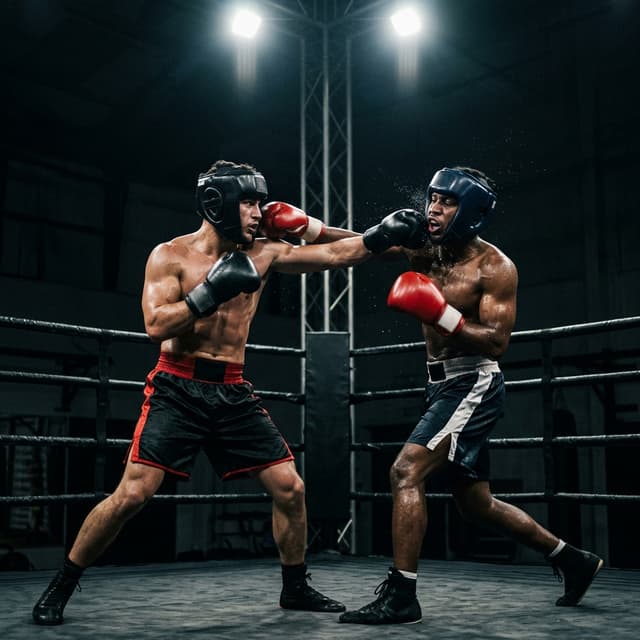
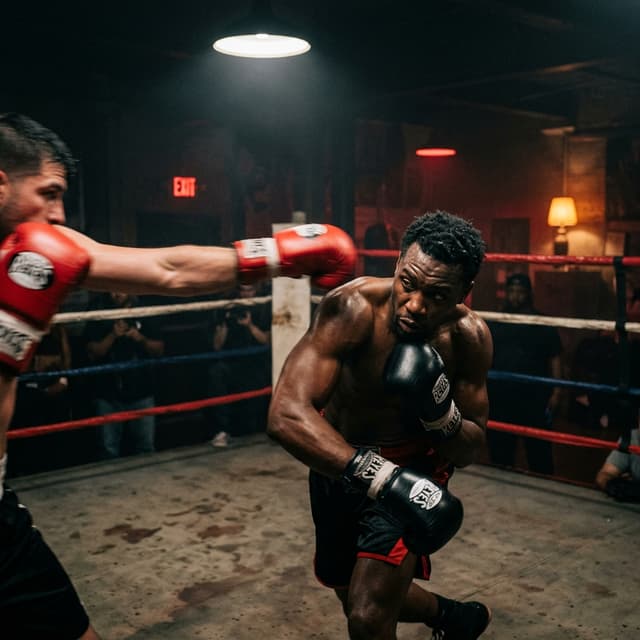
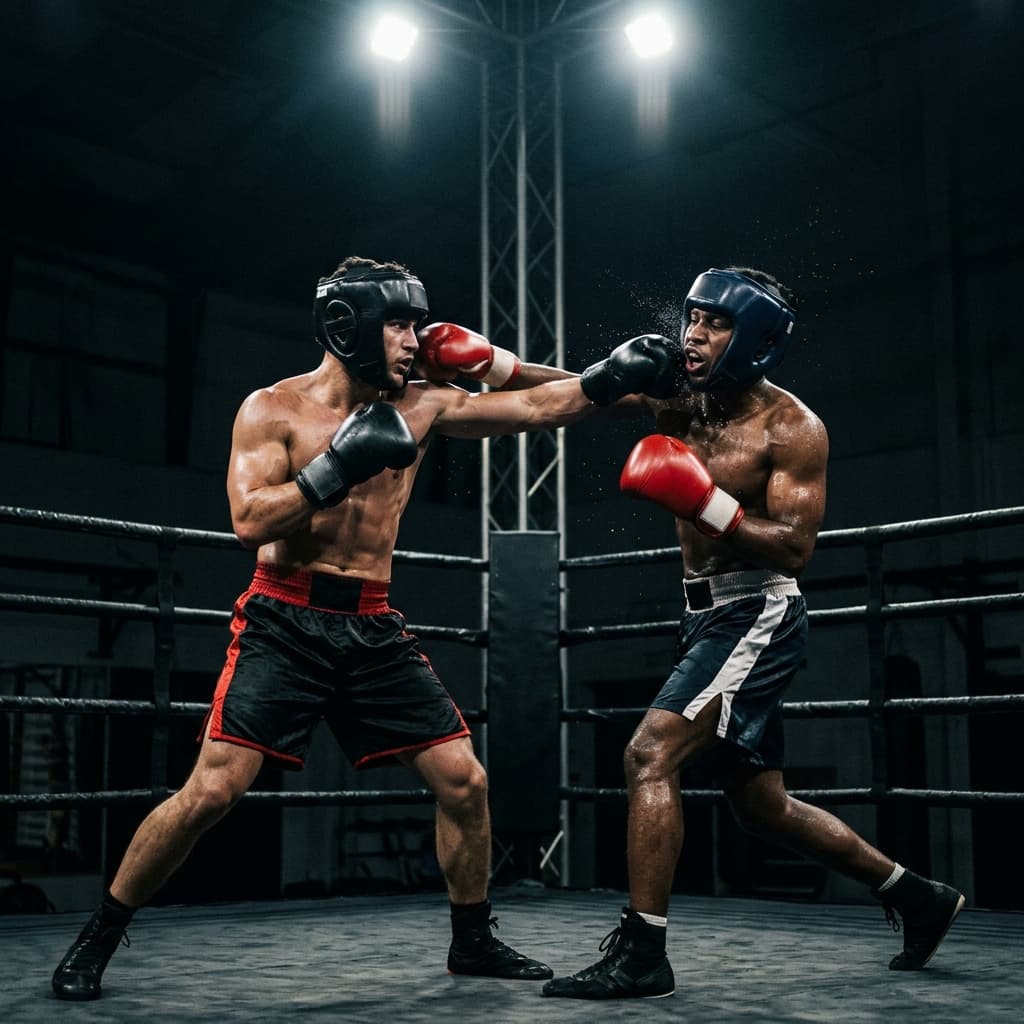
In a well-run gym, your first spar will be controlled and light. Your coach or an experienced training partner will go at about 30-50% intensity. They are not trying to hurt you — they are creating a safe environment where you can apply your skills against a real person for the first time. A good sparring partner for your debut is someone with significantly more experience who can modulate their own output. Think of it like a tennis player rallying with a beginner — the experienced player keeps the ball in play, not blasting winners.
Most gyms follow a specific protocol for first-timers. Your coach will pair you carefully, brief both fighters on the rules ("light work, nothing hard, stop when I say stop"), and stay within arm's reach of the ring. At Wildcard Boxing Club in Los Angeles and Kronk Gym in its heyday, the tradition was always the same: veterans had a responsibility to bring up newcomers safely. That culture is what separates a real boxing gym from a tough-guy storefront.
You will wear headgear, a mouthguard, 16oz gloves, and a groin protector. Some gyms also require a body protector for your first few sessions.
Rounds are typically 2-3 minutes with a full minute of rest. Some coaches shorten to 90-second rounds for absolute beginners.
Your partner will likely throw single jabs and light combinations while you practice your defense and basic counters.
Your coach will be ringside giving real-time feedback — calling out reminders like "hands up" and "breathe" throughout the round.
You will be exhausted after two rounds. This is completely normal. The adrenaline drain and the tension of keeping your guard up under live fire burns energy at a rate bag work cannot replicate.
The Mental Side
Getting hit in the face for the first time is a shock. Not because it hurts (light sparring with headgear is more surprising than painful), but because it breaks the illusion of control. On the heavy bag, you dictate everything — the timing, the distance, the pace. In sparring, another human is actively trying to outthink you, and the bag does not punch back.
The adrenaline dump will be intense. Your heart rate will spike well above your normal training zone — often into the 170-180 BPM range even during light work. You may experience tunnel vision, where your peripheral awareness collapses and you can only see what is directly in front of you. Some people freeze. Others start swinging wildly, abandoning every technique they have spent months learning. Both reactions are completely normal and happen to almost everyone.
Floyd Mayweather Sr. once described the first-spar adrenaline dump as "the filter" — it separates people who are willing to push through discomfort from those who are not. But here is the important part: the dump gets smaller every time. By your fifth or sixth sparring session, the panic is noticeably reduced. By your twentieth, you will feel almost calm in the ring. Your body learns to regulate the stress response through repeated exposure, which is the same principle behind stress inoculation training used by military and law enforcement.
One mental trick that helps: give yourself a single task per round. Not "win the round" or "look good." Something small and specific — "jab and move left after every exchange" or "keep my right hand glued to my cheek." A single focus point gives your brain something to hold onto when adrenaline tries to wipe your mental hard drive.
How to Survive
When in doubt, jab. That is the answer to almost every problem in your first sparring session.
The jab keeps the opponent at distance, disrupts their timing, and gives you something productive to do other than stand there getting hit. Larry Holmes built an entire Hall of Fame career around the principle that a busy jab solves most problems. When you are lost in the ring, the jab is your compass.
Keep your hands up. Keep moving. And breathe. Most beginners hold their breath during sparring, which accelerates fatigue catastrophically. Your muscles need oxygen to function, and your brain needs oxygen to make decisions. Exhale sharply on every punch — the "tss" sound you hear fighters make. This keeps air cycling through your system and prevents the suffocating tension that comes from a locked diaphragm.
Biomechanically, focus on staying in your stance. The most common physical breakdown under pressure is stance collapse — feet come together, weight shifts to the heels, and the hands drop to the chest instead of staying at cheekbone height. When you feel yourself falling apart, consciously reset: widen your base, bend your knees, hands up, chin down. Then jab.
If you get hit cleanly, resist the urge to retaliate with a wild shot. Instead, clinch or step back and reset your guard. Counter-punching is a skill for later. Right now, your job is to survive, stay composed, and learn what it feels like to operate under pressure.
Do not try to win your first spar. You will not win. And if you try, you will tense up, gas out, and learn nothing. The goal is information gathering — how does it feel when someone jabs at you? What happens to your footwork when you are under pressure? Where do your hands go when you are tired? These are the answers that will shape your next three months of training.
After the Session
After sparring, talk to your coach immediately while the experience is fresh. Ask specifically what you did well and what needs work — not vague reassurances, but actionable feedback. "Your jab was active but you kept dropping your right hand after the cross" is the kind of note that transforms your next session.
Do not be discouraged if you felt overwhelmed, clumsy, or scared. Every fighter in history felt the same way their first time. Manny Pacquiao has described his early sparring sessions as chaotic and frightening. Canelo Alvarez started sparring at age 13 and by his own account spent the first several sessions getting hit far more than he wanted. The ones who improve are the ones who keep showing up despite the discomfort.
After your first session, expect to feel an emotional high followed by a crash. The adrenaline comedown can leave you feeling drained, emotional, or even mildly depressed for a few hours. Eat a solid meal with protein and carbohydrates, hydrate aggressively, and get quality sleep that night.
Spar consistently — once or twice a week — and within a month, the panic fades and the learning accelerates. Keep a simple sparring journal: date, partner, rounds, and two bullet points about what you learned. Looking back at this journal after three months reveals progress you cannot see session to session. The distance between your first spar and your tenth is enormous. Trust the process.
See these techniques broken down by featured creator Coach Josh.
Build your sparring skills with structured training
The Boxing Blueprint is a 4-part video course covering fundamentals, conditioning, footwork, and fight strategy.
View The Boxing BlueprintReady to Practice?
Put what you learned into action with a guided shadowboxing session or timed heavy bag workout.