The Prerequisites
Before entering competition, you should have a minimum of 6-12 months of consistent training and regular sparring experience. That means training at least three to four times per week with structured sessions — not casual drop-ins or occasional bag work. You need a foundation of technical skills that you can execute under stress, because fight night pressure will erase anything that is not deeply ingrained.
Specifically, you should be comfortable getting hit without panicking, able to maintain composure under sustained pressure for three consecutive rounds, and have a basic game plan you can execute when your heart rate is through the roof. You need to have sparred regularly — not once or twice, but at least 20-30 rounds of live sparring with different partners of varying styles.
Terence Crawford did not have his first amateur fight until he had spent over a year in the gym building a technical base. Shakur Stevenson, who went on to win Olympic silver, trained extensively before his first bout and credits that patience with building the defensive habits that carried him through amateur and professional careers.
One critical rule: your coach should be the one who decides when you are ready — not you, not your ego. Coaches see your blind spots better than you can. If your coach says you need more time, trust the process. Rushing into competition before you are prepared does not build character — it builds bad habits under pressure and potentially gets you hurt.
Ask yourself these questions honestly: Can you go three hard rounds without your technique completely falling apart? Do you have at least two reliable combinations you can throw when tired? Can you take a clean shot without freezing or flailing? If the answer to all three is yes, you are likely ready. If any answer is no, keep building.
Registration and Requirements
Amateur boxing is governed by USA Boxing (in the United States), Boxing Canada, England Boxing, or your country's national boxing federation. Your gym should handle most of the logistics, but understanding the process helps you avoid last-minute surprises. Registration typically opens months before events, and some tournaments have entry deadlines 3-4 weeks out, so plan accordingly.
Your first bout will likely be at a local "smoker" or amateur show rather than a major tournament. These smaller events match novice fighters (0-5 fights) against other novices, which is exactly what you want. Avoid jumping into open-class tournaments where you might face someone with 30+ bouts.
Register with your national boxing federation — this typically costs $50-100 annually and includes insurance coverage for sanctioned bouts.
Complete a pre-fight medical examination — this includes a physical, blood work, and sometimes an eye exam. Some jurisdictions require an EKG or neurological baseline.
Obtain a competition passbook that tracks your fight record, medical clearances, and any suspensions.
Your coach must be registered as a licensed cornerman — they need their own credentials to work your corner on fight night.
Competition-approved equipment: headgear (AIBA/IBA approved), custom-fitted mouthguard, cup, competition gloves (usually 10oz for fighters under 152lbs, 12oz above), and approved attire — tank top, shorts above the knee, no-mark boxing shoes.
Some jurisdictions require a minimum number of documented sparring rounds before approving your first bout.
The 8-Week Fight Camp
Fight preparation typically runs 8 weeks, which gives you enough time to peak physically and mentally without burning out. This timeline is standard for everyone from novice amateurs to world champions — Canelo Alvarez, Oleksandr Usyk, and Naoya Inoue all run roughly 8-week camps, though the intensity is obviously different.
The first 4-6 weeks focus on building: increasing sparring frequency to 2-3 sessions per week, pushing conditioning to fight-pace intensity, and sharpening your game plan against the specific style you expect to face. This is where you do the heavy lifting — hard rounds on the pads, brutal conditioning circuits, and enough sparring to make the ring feel like a familiar environment rather than a terrifying one.
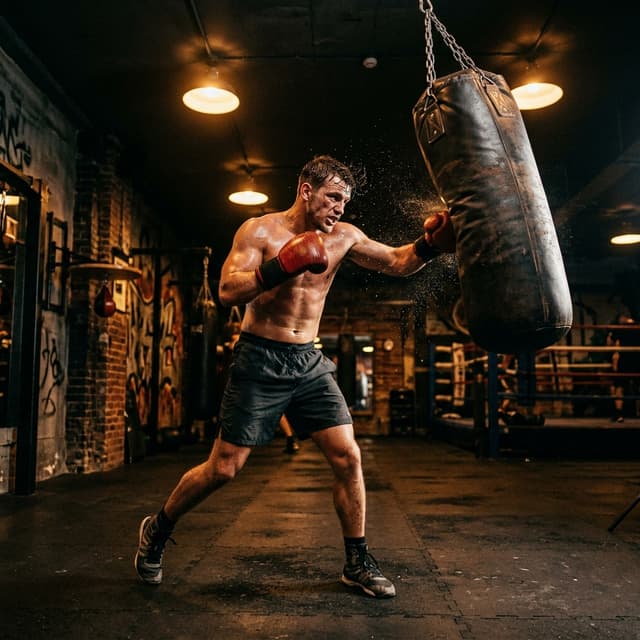
During this building phase, a typical training day looks like this: warm-up and shadow boxing (3 rounds), technical drill or mitts (4-6 rounds), sparring (3-4 rounds on sparring days), conditioning finisher (heavy bag intervals or sprints), and core work. Total training time: 90-120 minutes. Strength training stays in the program at 2 sessions per week — compound movements like squats, deadlifts, and pull-ups at moderate intensity.
The final 2 weeks taper. You reduce training volume by 40-50% while maintaining intensity and sharpness. Sparring drops to once per week and goes lighter — you are not trying to learn anything new, just staying sharp. The last sparring session should be no later than 5-7 days before the fight. The goal is to peak on fight night, arriving rested, sharp, and energized — not depleted from camp.
Common camp mistakes to avoid: sparring too hard in the final week (risking injury and fatigue), changing your game plan late in camp (trust what you have built), and neglecting sleep and nutrition because of anxiety (this is when recovery matters most).
Fight Night: What to Expect
You will arrive at the venue early — usually 2-3 hours before your bout. You weigh in (typically same day for amateur bouts, usually in the morning or early afternoon), get your hands wrapped and inspected by an official, and then wait. The waiting is the hardest part. Adrenaline builds with nothing productive to channel it into. You will see other fighters competing, hear the crowd, and your imagination will run wild.
Manage the wait deliberately. Bring headphones and a playlist that keeps you calm but focused. Stay warm — do light shadow boxing or stretching every 20-30 minutes. Eat a light snack 2-3 hours before your bout: a banana, a small sandwich, something easily digestible. Sip water with electrolytes. Do not chug a gallon of water right before you fight — sloshing liquid in your stomach during a fight is miserable.
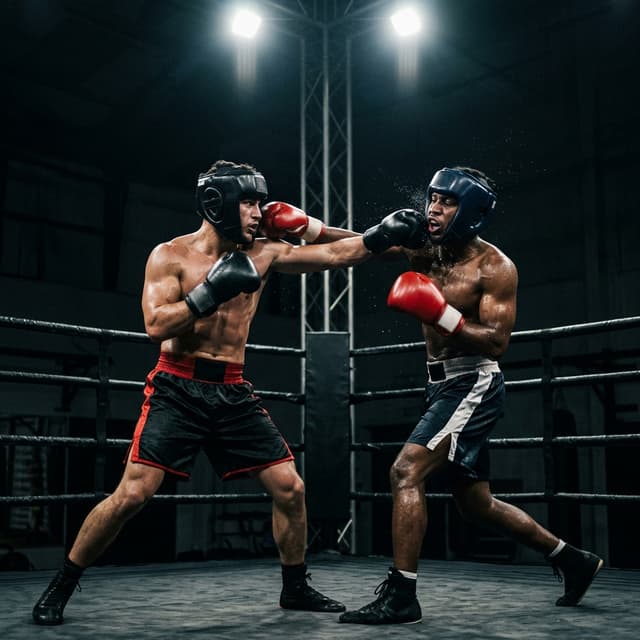
When your bout is called, your coach will glove you up, check your headgear and mouthguard, and walk you to the ring. The referee will bring both fighters to the center, give instructions ("protect yourself at all times, obey my commands, touch gloves"), and you will return to your corner.
Then the bell rings.
Amateur bouts are 3 rounds of 3 minutes each with 1-minute rest between rounds. Scoring is based on clean punches landed — judges count quality connections, not wildly thrown volume. This means precision and ring generalship matter more than raw aggression. The fighter who lands clean, visible shots while avoiding return fire wins rounds.
Round 1 strategy: Establish your jab. Move. Get your rhythm. Resist the urge to load up on power shots. Feel the opponent out — what do they throw first? Which direction do they move? Round 1 is about intelligence gathering, not finishing the fight.
The corner between rounds is critical. Listen to your coach. They can see things you cannot. Take slow, deep breaths, sip water (don't swallow too much), and focus on one adjustment for the next round. Not five adjustments. One.
Win or Lose, You Win
Your first fight is not about the result. It is about proving to yourself that you can step into the ring with another trained fighter and compete. That act alone — walking to the ring, touching gloves, and fighting — puts you in a category that most people will never experience. Regardless of the outcome, you have done something genuinely difficult.
Andre Ward lost one of his early amateur bouts and used it as fuel to go on a 14-year undefeated professional career. Guillermo Rigondeaux lost amateur fights before becoming one of the most decorated amateurs in Cuban history. Vasiliy Lomachenko lost in his second professional fight and came back to win world titles in three weight classes. Losses are data, not destiny.
You will learn more about yourself in nine minutes of fighting than in six months of bag work. You will learn where your conditioning fails, which techniques hold up under pressure and which evaporate, how you react when you get hit hard, and whether you can impose your will on someone who is trying to impose theirs on you. These are answers you cannot get any other way.
After the fight, win or lose, do a thorough debrief with your coach. Review footage if available — many amateur events allow corner-recorded video. Identify three specific things that worked and three that did not. Build your next training block around closing those gaps.
The fighters who build successful amateur careers are the ones who treat the first fight as a lesson, not a test. The result is temporary. The experience is permanent. Get back in the gym the following week, apply what you learned, and start preparing for the next one.
See these techniques broken down by featured creator Coach Josh.
Get competition-ready with the full training system
The Boxing Blueprint is a 4-part video course covering fundamentals, conditioning, footwork, and fight strategy.
View The Boxing BlueprintReady to Practice?
Put what you learned into action with a guided shadowboxing session or timed heavy bag workout.