What Is a Parry?
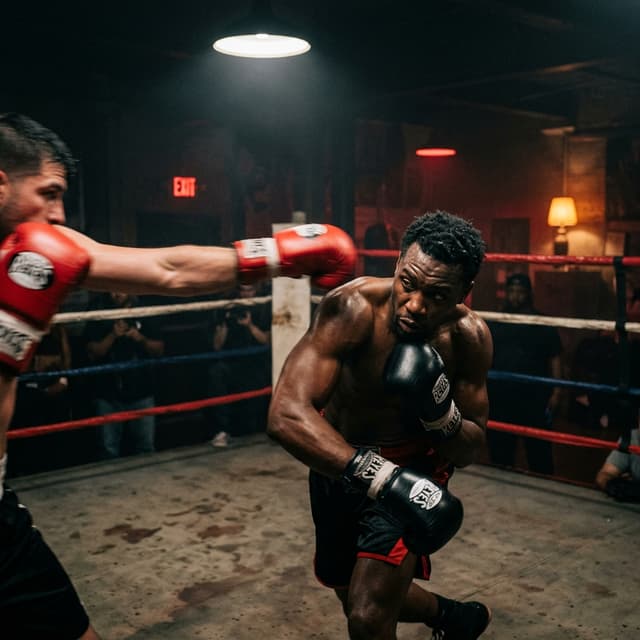
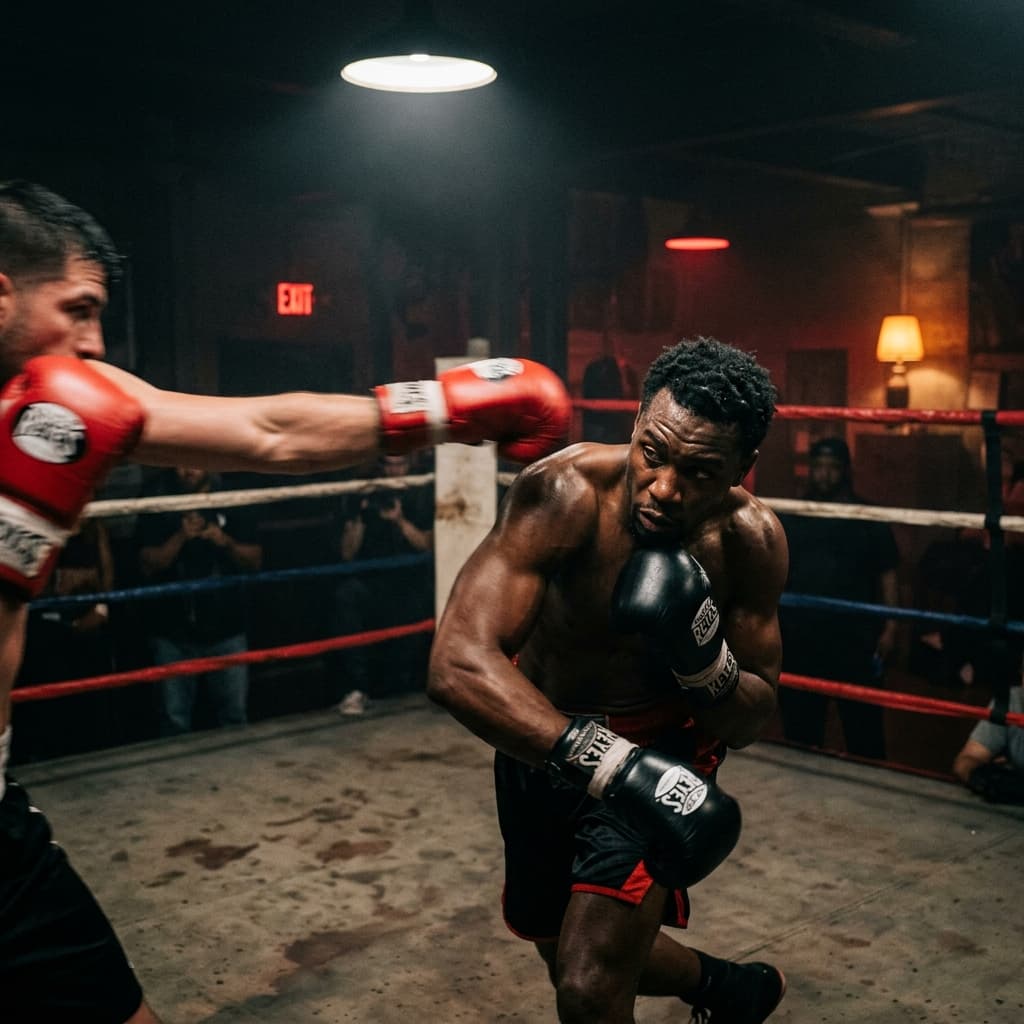
A parry is a small, sharp deflection of an incoming punch using your hand. It is the first defensive technique many coaches teach after the basic block, and for good reason — it is simple to learn, immediately effective, and builds habits that translate directly into more advanced defensive skills.
Unlike blocking (which absorbs the force of a punch through your guard), a parry redirects it. You use your rear hand to tap the opponent's jab across your body, pushing it off target. The key distinction is that a block says "I will take that punch on my gloves," while a parry says "I will send that punch somewhere it was not aimed." The biomechanical advantage is significant: deflecting a punch requires far less energy than absorbing it, and it disrupts the opponent's balance by redirecting their momentum sideways.
This opens a clear lane for your counter punch and throws off the opponent's balance and rhythm. When you parry a jab, you push the opponent's lead hand to one side — which means their lead shoulder rotates with it, pulling their body slightly off-center. For a fraction of a second, their guard has a gap down the middle. That gap is where your counter cross lives.
Juan Manuel Marquez was one of the greatest parry-counter fighters in boxing history. His timing was so precise that he could parry Manny Pacquiao's blazing jab — one of the fastest in the sport — and fire a counter right hand that arrived before Pacquiao could retract. Their fourth fight ended with exactly this kind of timing: Pacquiao lunged in, and Marquez's counter right hand (set up by years of parry-counter drilling) knocked him unconscious.
Andre Ward used the parry extensively as a foundation for his entire offensive system. He would parry the jab, fire a counter right hand, then follow with a left hook — all triggered by that initial small deflection.
How to Execute the Parry
The parry uses minimal movement. You are not swatting at the punch — you are redirecting it with a crisp, small tap. Think of it as gently brushing something aside, not slapping it away. The smaller the motion, the more effective the parry, because a large sweeping motion opens your guard and wastes time that should be spent countering.
Biomechanically, the parry works because of leverage and timing. You are catching the opponent's fist near the end of its extension, where it has the least structural support. At full extension, the jab has spent its force — your small redirecting tap has an outsized effect because the arm is at its weakest point in the punch arc. It is like pushing a door at the edge rather than near the hinge — a small force creates a large movement.
The parry can be executed with either hand, but the rear-hand parry of the jab is the most common and most tactically useful version. This is because your rear hand is already positioned near the center of your guard, and the counter cross is the natural follow-up from the rear hand's position.
From your guard, use the open palm of your rear hand to tap the incoming jab to the outside. Your palm should meet the opponent's glove or wrist — not the forearm. Catching the wrist gives you better control of the deflection angle.
The motion is small — move your hand about four inches. No more. Any more than that and your guard opens on the other side, inviting a hook or a second straight punch.
Tap the jab toward the outside of your lead shoulder, clearing the center line. The center line is the imaginary vertical line between you and your opponent — your counter needs a clear path down this line, and the parry creates it.
As you parry, load your counter at the same time — usually a straight cross right down the middle. The parry hand taps outward while your hips begin rotating for the cross. These two motions should happen simultaneously, not sequentially.
Fire the counter immediately. The parry creates a split-second opening that closes fast — roughly 200-300 milliseconds before the opponent retracts their jab and resets their guard. Hesitate and the window closes.
What Makes a Good Parry vs. a Bad One
A good parry is small, sharp, and immediately followed by a counter. The hallmark of a well-executed parry is that it looks effortless — a tiny flick of the wrist that sends the incoming punch sliding past your face while your other hand is already firing.
A bad parry has several telltale signs. Reaching out toward the incoming punch is the most common error — instead of catching the jab as it arrives at your guard, you extend your arm forward to meet it early. This leaves your guard wide open for the duration of your reach, and if the opponent feints the jab, you have committed your defensive hand to empty space while the real punch comes through the gap.
Excessive motion is another mistake. Some fighters develop a habit of sweeping the parry in a large circular motion, almost like they are clearing a cobweb. This wastes energy, telegraphs the parry (so the opponent can pull the jab and throw a different punch), and takes the hand too far from guard position to recover quickly.
Parrying without countering is perhaps the most common mistake at all levels. If you parry a jab and do nothing, you have successfully defended one punch but gained zero tactical advantage. Your opponent resets and throws another jab, and you are right back where you started. The parry exists to create a counter opportunity. If you parry and do nothing, you are just playing defense for no reason — and defense without offense does not win rounds.
One more subtle error: parrying with a closed fist. An open palm is more effective because the broader surface area makes it easier to catch and redirect the incoming punch. A closed fist is a smaller target that can miss the deflection entirely, and the instinct to make a fist often causes the parrying hand to punch at the incoming jab rather than redirecting it, which turns the parry into a collision instead of a deflection.
Drilling the Parry-Counter
This is one of the most practical drills in boxing, and it translates directly to sparring because the skill requires timing against a real stimulus. You cannot meaningfully practice the parry in shadow boxing the way you can practice slips or rolls — you need something actually coming at you to develop the timing and distance sense.
Level 1 — Single jab parry-counter: Have your partner throw single jabs at about 50% speed. Parry each jab with your rear hand and immediately fire a counter cross. Focus on the simultaneity of the parry and the counter loading — the parry hand taps outward at the same moment your hips begin turning for the cross. Do not wait until the parry is complete to begin your counter. Three rounds of this builds the foundational timing.
Level 2 — Speed progression: Once the timing feels natural at 50%, have your partner increase to 70%, then 80%. You will notice that as the jab gets faster, your parry naturally becomes smaller and sharper — the urgency forces you to eliminate wasted motion, which is exactly what you want. At full speed, the parry is barely visible.
Level 3 — Double jab defense: Have your partner throw double jabs. Parry the first, then either parry the second or slip it. This teaches you to handle follow-up punches after the parry — because in a real fight, nobody throws just one jab. The parry-parry-counter and the parry-slip-counter are both essential combinations.
Level 4 — Jab-cross defense: Progress to parrying the jab and slipping the follow-up cross. This is a high-level defensive sequence that chains two different defensive techniques together. You parry the jab with your rear hand, then slip the cross by rotating your torso. This is the defensive bread-and-butter of counter fighters at the professional level — Marquez, Ward, and Mayweather all use this sequence extensively.
Solo drill — Tennis ball against a wall: Throw a tennis ball against a wall at chest height and parry it with your rear hand as it bounces back. This builds hand-eye coordination and parry timing without a partner. Start at close range and gradually step back as your reflexes improve.
See these techniques broken down by featured creator Coach Josh.
Learn the complete defensive system
The Boxing Blueprint is a 4-part video course covering fundamentals, conditioning, footwork, and fight strategy.
View The Boxing BlueprintReady to Practice?
Put what you learned into action with a guided shadowboxing session or timed heavy bag workout.