What "Reading" an Opponent Actually Means
Reading your opponent isn't some mystical sixth sense. It's pattern recognition under pressure — the ability to observe, catalog, and predict what another fighter will do based on what they've already shown you.
Every fighter has habits. They load their right hand the same way. They step to the same side after a jab. They drop their lead hand before every hook. These aren't random — they're deeply grooved motor patterns built over thousands of repetitions in the gym. Under the stress of a fight, fighters default to their habits even more.
Your job is to find those patterns faster than your opponent finds yours. Andre Ward was arguably the best at this in modern boxing. Watch his fight against Sergey Kovalev — by round three, Ward had completely downloaded Kovalev's timing, distance triggers, and combination patterns. He knew exactly when Kovalev would load up and exactly where the openings would appear.
Reading is what separates skilled fighters from elite ones. Two fighters can have identical physical tools. The one who reads better will win nine times out of ten.
Identifying Telegraphs Before Punches
A telegraph is any involuntary movement that precedes a punch. Every fighter has them. The goal is to spot your opponent's telegraphs while minimizing your own.
The most common telegraphs to watch for:
Eye focus shift — many fighters look at the target before they punch. If their eyes drop to your body, a body shot is coming.
Shoulder loading — the rear shoulder pulling back slightly before a cross or overhand. The bigger the wind-up, the more obvious the telegraph.
Weight transfer — a subtle shift onto the back foot often precedes a power shot. The front foot getting light means something heavy is loading behind it.
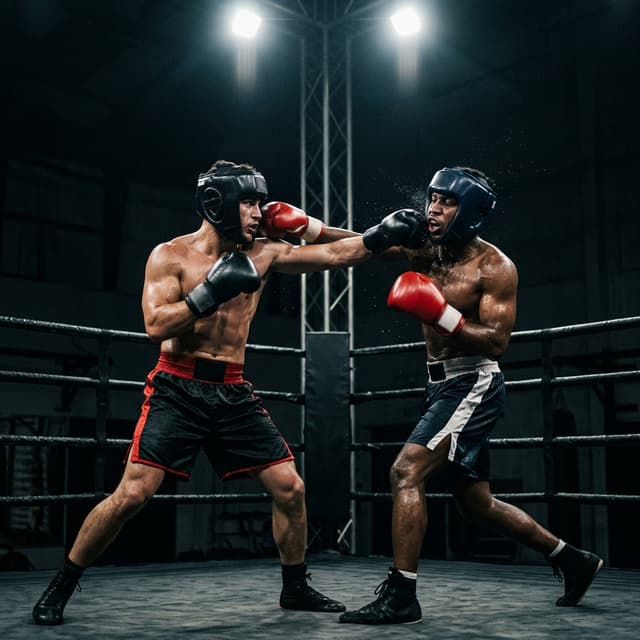
Hand drop — the lead hand dipping two inches before a lead hook. Almost universal in amateur fighters.
Breath pattern — some fighters take a visible inhale before launching a combination. You can literally hear it coming.
Foot repositioning — a small step to the outside with the lead foot often sets up an angle for a hook or overhand.
Reading Stance and Movement Patterns
Before a single punch is thrown, your opponent's stance tells you a story. A wide, square stance usually means a brawler who wants to trade. A narrow, bladed stance with the lead shoulder high suggests a counter-puncher who'll make you reach.
Watch the feet. Flat-footed fighters telegraph everything through weight shifts. A fighter on their toes is harder to read because they can launch from either position, but they're also less committed to their power shots.
Pay attention to how your opponent moves after throwing. Do they always retreat straight back? That's a pull-counter opportunity. Do they circle left after every combination? You can cut them off. Do they stand still and admire their work after landing? That's a counter window.
Juan Manuel Marquez built his entire career on reading these movement patterns. Against Manny Pacquiao, Marquez studied how Pacquiao lunged in with straight punches and timed a right hand to meet him coming forward. That wasn't luck — it was thousands of hours of pattern observation compressed into one perfect counter. Marquez had identified the exact footwork sequence Pacquiao used before his straight left, and he had the answer ready.
The First Two Rounds: Your Download Window
The first two rounds of any fight should be treated as an information-gathering mission. You're not trying to knock anyone out in rounds one and two. You're building a mental database.
Here's what to catalog in the opening rounds:
Lead hand behavior — does the jab come straight or loopy? Is it a range-finder or a committed shot?
Defensive defaults — when you throw your jab, do they slip, parry, or block? Which direction do they move?
Combination starters — most fighters have one or two ways they start combinations. Find those starters and you can predict the rest.
Recovery patterns — after they throw, where do their hands return? Is there a gap between the last punch and the guard resetting?
Distance comfort zone — at what range do they start throwing? Where do they feel safe?
Emotional triggers — what makes them rush in? What makes them shell up? How do they react to body shots?
Using Feints to Test Your Opponent
Feints are questions. Every feint you throw asks your opponent, "What will you do when I attack?" Their answer tells you exactly how to attack for real.
Throw a jab feint. If they parry hard to the outside, the straight right behind a jab feint is wide open. If they pull back, you can step in with a jab to the body. If they don't react at all, they're either incredibly disciplined or they can't see it — either answer is useful information.
Floyd Mayweather was the greatest feinter in modern boxing. He'd spend entire rounds throwing feints just to see how opponents reacted. By round four or five, he'd mapped every defensive response and had a counter programmed for each one. His opponents felt like they were fighting someone who could see the future. He couldn't. He was just asking better questions.
Here's a feinting progression to use in sparring:
Start with a single jab feint — just extend the lead hand six inches without committing. Watch the reaction. Then try a level-change feint — dip your knees like you're going to the body, see if they drop their hands. Follow with a step feint — stomp your lead foot forward without punching. Each feint reveals a layer of your opponent's defensive programming.
The key is to actually watch the response. Most fighters throw feints but don't observe the result because they're already thinking about their next move. Slow down. Feint. Watch. Process. Then attack the opening you've confirmed exists.
Recognizing Hurt vs. Baiting
One of the most dangerous moments in a fight is when your opponent looks hurt. Is it real, or is it a trap?
Genuinely hurt fighters display specific involuntary signs that are nearly impossible to fake:
Legs stiffening or buckling — the knees don't lie. Wobbly legs mean a compromised fighter.
Eyes glazing or unfocusing — a rocked fighter's eyes go distant for a half-second. You can't fake that.
Grabbing or clinching desperately — hurt fighters clinch to survive. The grip is tight and panicked, not tactical.
Retreating in straight lines — a hurt fighter forgets angles and backs up directly, often into the ropes.
Punches losing snap — when a fighter is hurt, their return fire becomes arm punches with no hip rotation.
Southpaw Tells and Stance Switches
Southpaws present a unique reading challenge because everything is mirrored. Your orthodox-trained instincts read the wrong hand as the power hand, and the angles are reversed.
Here are the key tells to look for against southpaws:
Watch the lead foot position. In an orthodox-vs-southpaw matchup, the fighter whose lead foot is outside has the angle advantage. If the southpaw keeps getting their left foot outside your right, they're setting up the straight left. Recognize this positioning and circle to your left to deny the angle.
Southpaw right hooks are harder to see because they come from your blind side — the same side as your rear hand. When a southpaw starts dipping to their right, a right hook is loading. That's your cue to step back or counter with your own right hand over the top.
Fighters who switch stances mid-fight are giving you a massive amount of information. A switch usually precedes a specific attack. If they switch to southpaw, they're likely setting up a left cross. If they switch back to orthodox, the right hand is coming. Terence Crawford uses stance switches as setups — but even his switches follow patterns. He tends to switch, feint, then attack from the new stance. Once you identify the rhythm, you can time the counter.
Andre Ward used a brilliant tactic against southpaws: he'd place his lead foot outside, threaten the right hand, then pivot to his left and throw the left hook as the southpaw stepped into position. This worked because Ward had already read that most southpaws would try to establish their own outside foot position, which pulled them directly into his left hook.
Body Language That Reveals Everything
Fatigue, confidence, and fear all have physical signatures that fighters can't fully hide. Learning to read body language gives you a tactical edge that no punch can provide.
A fatigued fighter starts carrying their hands lower between exchanges. Their footwork becomes flat and plodding. They lean on the ropes more. They clinch not for strategy but for rest. Their combinations shorten — a fighter who threw four and five-punch combos in round one is now throwing ones and twos by round six. That's your green light to increase pressure.
A confident fighter stands taller, occupies ring center, and throws with authority. But over-confidence creates openings — confident fighters take risks, leave their chin exposed after landing, and sometimes admire their work instead of following up. If your opponent gets visibly confident, they're also getting comfortable. Comfortable fighters get countered.
A scared fighter does the opposite — they flinch at feints, turn their head away from punches instead of slipping properly, and throw tentative arm punches instead of committing. When you see fear, don't just attack — systematically remove their options. Cut off the ring. Take away their escape routes. Make them fight in the space where they're least comfortable.
The ultimate read is knowing when your opponent has mentally quit. They stop trying to win rounds and start trying to survive. Their offense disappears entirely. They clinch on every exchange. Their corner is doing all the work. When you see this, maintain pressure but stay disciplined — desperate fighters throw desperate punches, and one wild shot can change everything.
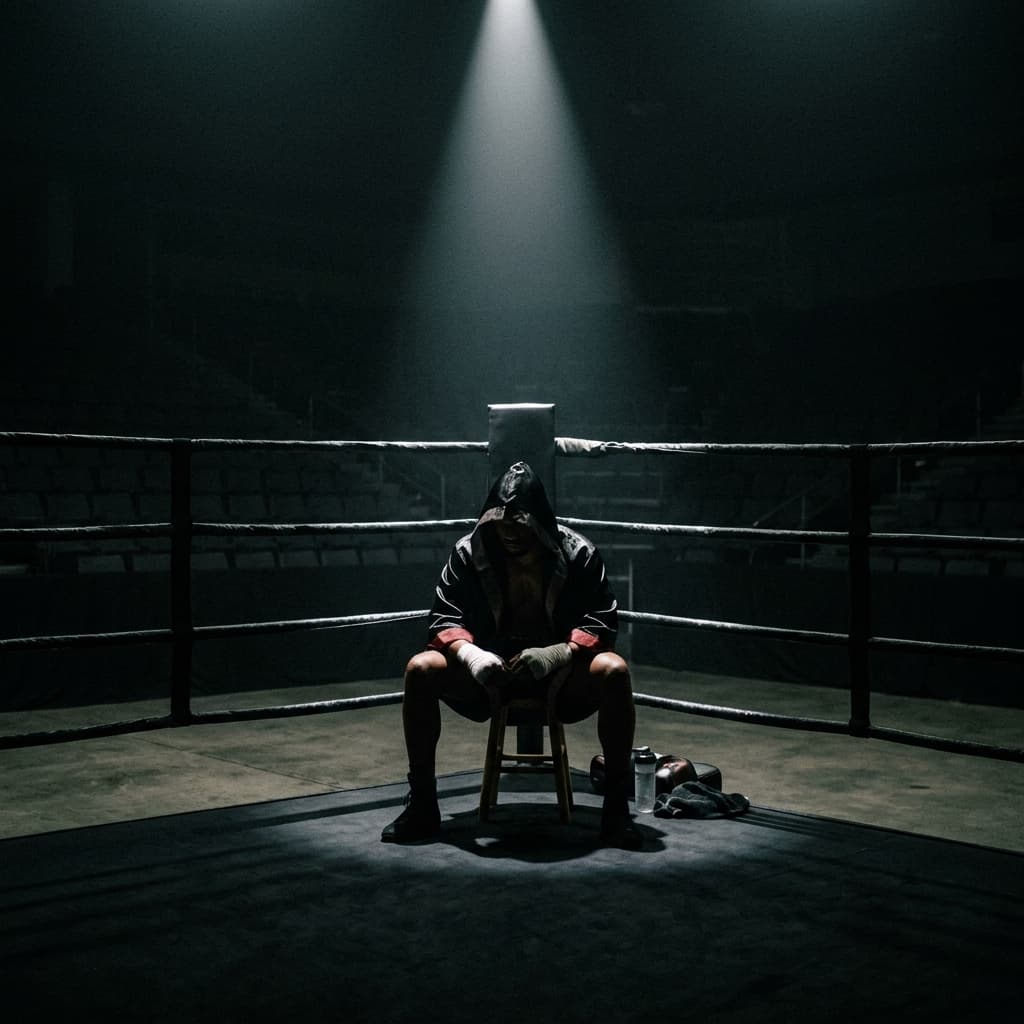
Floyd Mayweather once said he could tell when an opponent had given up by watching their feet between rounds. If they walked slowly back to their corner and sat down heavily, the fight was over mentally even if it continued physically. The best readers don't just watch hands. They watch everything.
Adjusting Mid-Fight: Putting Reads Into Action
Gathering information is useless if you don't act on it. The hallmark of a high-IQ fighter is making real-time adjustments based on what they've observed.
Here's a framework for mid-fight adjustments:
If your opponent consistently slips to the outside after your jab, follow the jab with a lead hook instead of the cross. You're punishing their defensive habit. If they always parry, switch to the jab-to-the-body. If they pull straight back, step in with a double jab to close distance.
If your opponent has found a home for their right hand, you need to change the angle it's landing from. Step to your left before engaging. Use a check hook to make them pay for charging forward. Pivot after your combinations instead of staying in the pocket.
Juan Manuel Marquez was the king of mid-fight adjustment. In the fourth Pacquiao fight, Marquez made a critical adjustment in the later rounds — he stopped retreating after his counters and instead stepped slightly to his right, which put him at an angle where Pacquiao's follow-up left hand couldn't reach. That small positional change created the opening for the knockout.
Train this in sparring. After every round, mentally note one thing your sparring partner does consistently. In the next round, implement a counter-tactic specifically for that habit. Over time, this process becomes automatic — you'll start making adjustments within exchanges, not just between rounds.
The goal isn't to out-punch your opponent. It's to out-think them. And thinking in the ring starts with seeing what's actually in front of you, not what you expected to find.
See these techniques broken down by featured creator Coach Josh.
Develop elite ring IQ with our strategy course
The Boxing Blueprint is a 4-part video course covering fundamentals, conditioning, footwork, and fight strategy.
View The Boxing BlueprintReady to Practice?
Put what you learned into action with a guided shadowboxing session or timed heavy bag workout.