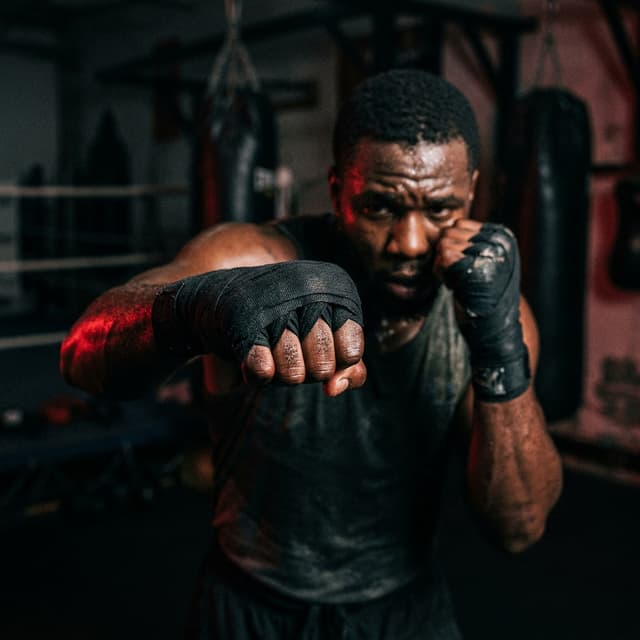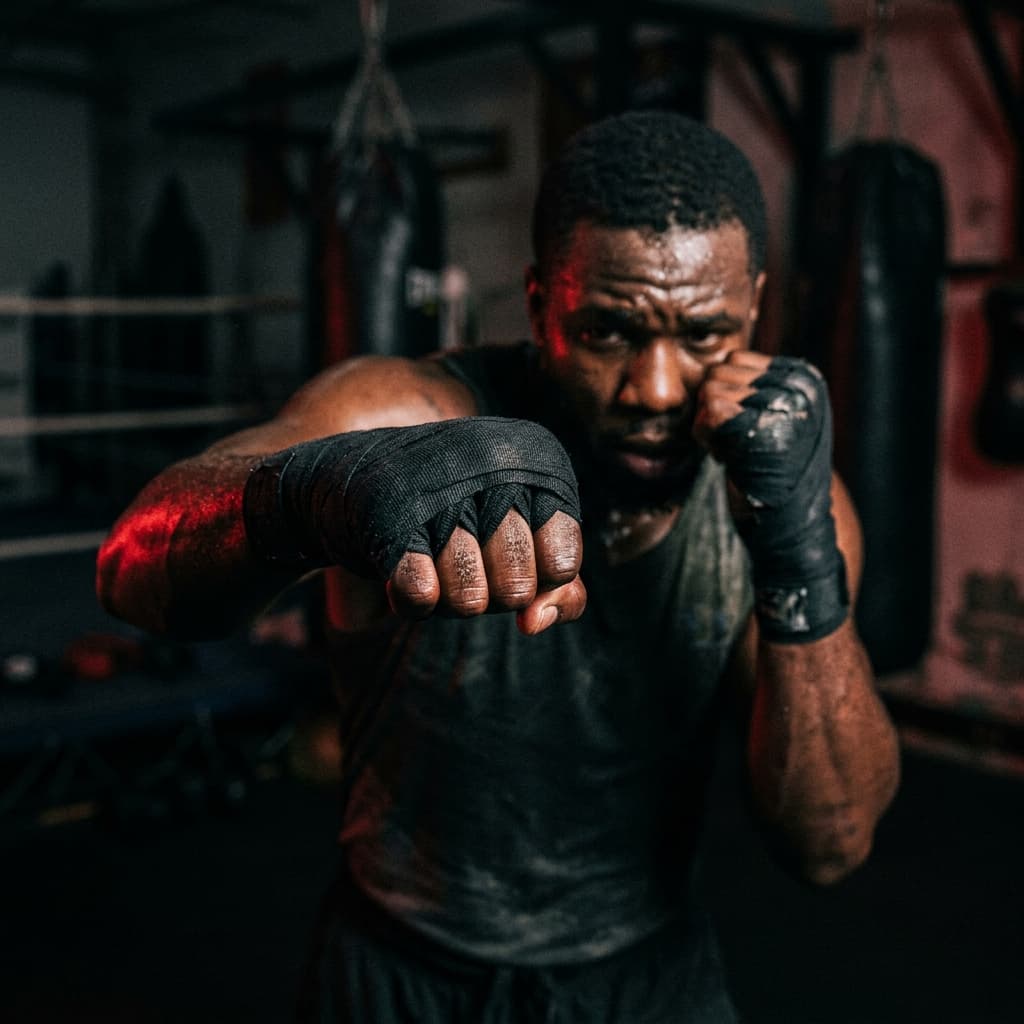
Amateur boxing is not professional boxing. If you fight in an amateur tournament the way you watch pros fight on television, you will lose. Professional boxing matches are long, slow-paced, and prioritize damage. Amateur boxing matches are short, fast-paced, and prioritize scoring clean, scoring blows.
To succeed in the amateur ranks, you must know the rules, understand how judges score, and adapt your tactics to the specific format of amateur matches.
This guide details the rules, division structures, scoring criteria, and tactical strategies you must master to win in amateur boxing.
Match Structure: Rounds and Divisions
Amateur bouts, officially sanctioned as Olympic-style boxing, are structured to ensure safety and fair competition.
Round Durations
The length of a match depends on your age and competitive class.
- Elite Men and Women (Ages 19 to 40): Bouts consist of three rounds of three minutes each, with a one-minute rest interval between rounds.
- Youth (Ages 17 to 18) and Juniors (Ages 15 to 16): Bouts typically consist of three rounds of two minutes each, with a one-minute rest interval.
- Novice Divisions: Some local governing bodies run novice bouts (fewer than ten fights) at three rounds of two minutes to help boxers adjust to competition.
Weight Classes
Amateur boxing uses strict weight limits. Internationally, the divisions are set by World Boxing, which replaced the IBA after the IOC expelled it in 2023 and now runs Olympic boxing. Since 2025 its elite championships have used ten divisions for men and ten for women:
- Elite Men Divisions: Flyweight (47–50 kg), Bantamweight (50–55 kg), Lightweight (55–60 kg), Welterweight (60–65 kg), Light Middleweight (65–70 kg), Middleweight (70–75 kg), Light Heavyweight (75–80 kg), Cruiserweight (80–85 kg), Heavyweight (85–90 kg), Super Heavyweight (90+ kg).
- Elite Women Divisions: Light Flyweight (45–48 kg), Flyweight (48–51 kg), Bantamweight (51–54 kg), Featherweight (54–57 kg), Lightweight (57–60 kg), Welterweight (60–65 kg), Light Middleweight (65–70 kg), Middleweight (70–75 kg), Light Heavyweight (75–80 kg), Heavyweight (80+ kg).
The Olympics use fewer divisions: seven each for men and women at LA 2028. National federations such as USA Boxing set their own classes for youth and novice boxers.
At local tournaments, weigh-ins occur on the morning of the competition. You must weigh in within your registered class; there is no allowance or grace period. If you are even 100 grams over, you are disqualified.
Mandatory Gear
You must wear specific protective gear to compete.
- Gloves: You must use gloves approved by the sanctioning body (such as USA Boxing or World Boxing). Elite male boxers use 10-ounce or 12-ounce gloves depending on the weight class. The gloves feature a white target zone over the knuckles.
- Headgear: Master and Junior divisions require USA Boxing-approved headgear. Elite open-class male boxers compete without headgear in international matches, but female boxers and youth divisions still wear it.
- Singlet: You must wear a tank top that matches the color of your corner (red or blue). The shirt must contrast with your waistband so the referee can clearly see low blows.
- Mouthpiece and Cup: A form-fitted mouthpiece is mandatory. Male boxers must wear a protective groin cup. Female boxers must wear a groin protector and may wear a chest protector.
Ringside Setup and Scoring Technology
In modern amateur boxing, the ringside setup is designed to prevent bias and ensure accurate scoring. Five judges are seated around the ring so that every exchange is seen from more than one angle:
- Round-by-Round Scoring: Each judge decides who won each round and scores it on the 10-point must system (see below). Judges score independently and don't count punches with a clicker; the old punch-counting computer system was scrapped in 2013.
- Electronic Entry: At major tournaments, judges enter their scores electronically, so the result is calculated and announced as soon as the bout ends.
- Bout Reviews: In major international tournaments, if a team believes a decision was made in clear violation of the rules (such as scoring a knockdown incorrectly or missing a major foul), they can file a formal protest. The tournament supervisor and an independent panel review the video footage to confirm or overturn the decision.
The Scoring System: The 10-Point Must
Amateur boxing uses the "10-Point Must" system, managed by five ringside judges.
At the end of each round, each judge must award 10 points to the winner of the round and a lower number (typically 9, 8, or 7) to the loser. The scores from the three rounds are added together to determine the winner of the bout.
Scoring Criteria
Judges score rounds based on three main criteria, ranked in order of importance:
- Number of Quality Blows Landed on the Target Area: This is the most critical factor. A quality blow is a punch that lands cleanly with the knuckle part of the glove on the front or sides of the head or body above the belt. Slapping punches, punches blocked by arms, and punches that hit the back of the opponent do not score.
- Technical and Tactical Dominance: The judge looks at who is dictating the pace of the action, landing combinations, and displaying superior boxing skills.
- Competitiveness: If the quality blows are equal, the judge awards the round to the boxer who shows more initiative, drive, and effort.
What Does Not Score
Do not waste energy throwing punches that do not score. The following do not count:
- Punches that land on the opponent's arms, shoulders, or gloves.
- Punches that land with the inside of the glove, the wrist, or the side of the hand.
- Weak, tapping punches that do not carry force.
- Punches thrown after the referee commands "break" or "stop."
Common Infractions and Point Deductions
The referee manages the action inside the ring. If you break the rules, the referee will give you a warning or a caution. Multiple cautions for the same offense will lead to a formal warning, which results in an automatic one-point deduction from all five judges' scorecards.
Major Infractions
- Holding: Grabbing the opponent's arms, body, or neck to prevent them from punching.
- Low Blows: Punching below the line of the navel.
- Hitting Behind the Head (Rabbit Punching): Landing punches on the back of the neck or skull.
- Pushing or Headbutting: Using your head, shoulder, or body weight to push the opponent away.
- Turning Your Back: Turning your back to the opponent to escape punches. This is a safety hazard: expect a caution, and the referee may give you a standing count.
- Duck Below the Belt: Bending your waist so low that your head drops below the level of the opponent's belt line.
Match Outcomes and Decisions
A bout can end in several ways:
- Points Decision (WP): The match goes the distance, and the judges' scorecards determine the winner. If all judges agree, it is a Unanimous Decision. If judges disagree, it is a Split Decision.
- Referee Stops Contest (RSC): The referee stops the bout because a boxer is outclassed, taking excessive punishment, or unfit to continue due to injury.
- Abandon (ABD): A boxer or their corner voluntarily stops the fight (usually by throwing in the towel).
- Disqualification (DQ): A boxer is disqualified for repeated fouls or unsportsmanlike behavior.
- Knockout (KO): A boxer is down and cannot resume boxing before the referee counts to ten.
The Standing Eight Count
The standing eight count is a safety protocol unique to amateur-style boxing. If a boxer is hit with a clean shot and appears dazed, unstable, or unable to defend themselves, the referee will step between the fighters and count to eight.
- Procedure: The referee sends the opposing boxer to the neutral corner. The referee then stands in front of the dazed boxer and counts to eight while checking their eyes and stability.
- Scoring Impact: A standing eight count does not result in an automatic point deduction like a knockdown in professional boxing. However, it indicates to the judges that the boxer took a clean, damaging blow, which often sways the scoring of the round.
- Limits: In amateur bouts, receiving three standing eight counts in a single round, or four in a single match, results in an automatic stoppage (RSC).
Tactical Plan for Amateur Success
To win in the amateurs, adjust your training and ring strategy to fit this fast-paced environment.
1. Win the First Round
In a three-round fight, you cannot afford to spend the first round "feeling out" your opponent. If you lose the first round, you must win both remaining rounds to win the fight. Start fast. Throw your jab immediately, establish center-ring control, and land clean scoring blows within the first thirty seconds.
2. Prioritize Punch Volume
Amateur judges respond to activity. A boxer who throws four-punch combinations will look more dominant than a boxer who throws single power shots, even if the power shots are harder. Throw punches in bunches. Follow every cross with a hook, and finish your combinations with a jab.
3. Maintain High Cardiovascular Conditioning
Because amateur rounds are short, the intensity is continuous. There are no slow periods. You must have the stamina to throw 80 to 100 punches per round while maintaining a high work rate. Build your conditioning through interval training and high-intensity bag sessions.
4. Focus on Head Movement and Defense
Judges score punches that land cleanly. If you block a punch with your glove, it does not score, but it can look like a scoring blow from a bad angle. The best defense is to make the opponent miss completely. Use slips, ducks, and footwork to keep your head off the centerline.
Summary Checklist
- Amateur matches consist of three rounds, usually two or three minutes each.
- Judges score based on clean punches landing on the target area, dominance, and competitiveness.
- Quality blows must land with the knuckle portion of the glove.
- A referee warning for repeated fouls results in a one-point deduction.
- Three standing eight counts in a round, or four in a fight, ends the match.
- Start fast; winning the first round is crucial for securing a points victory.
- Use combination punching to show dominance to the judges.
See these techniques broken down by featured creator Coach Josh.
Ready to Practice?
Put what you learned into action with a guided shadowboxing session or timed heavy bag workout.