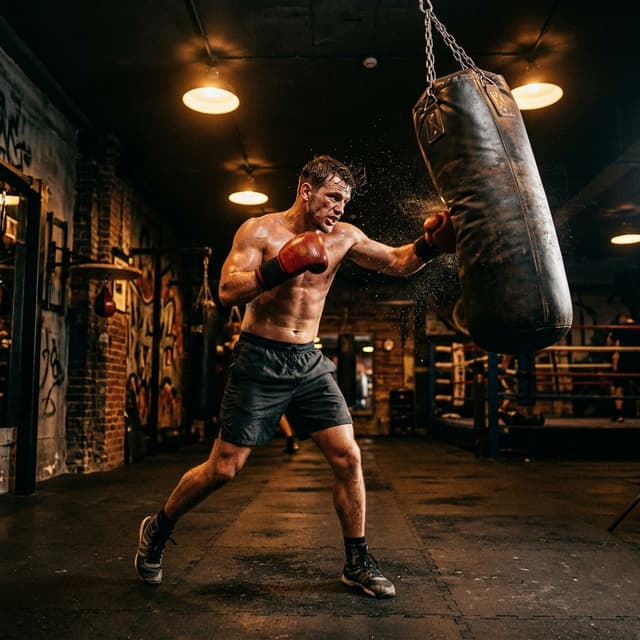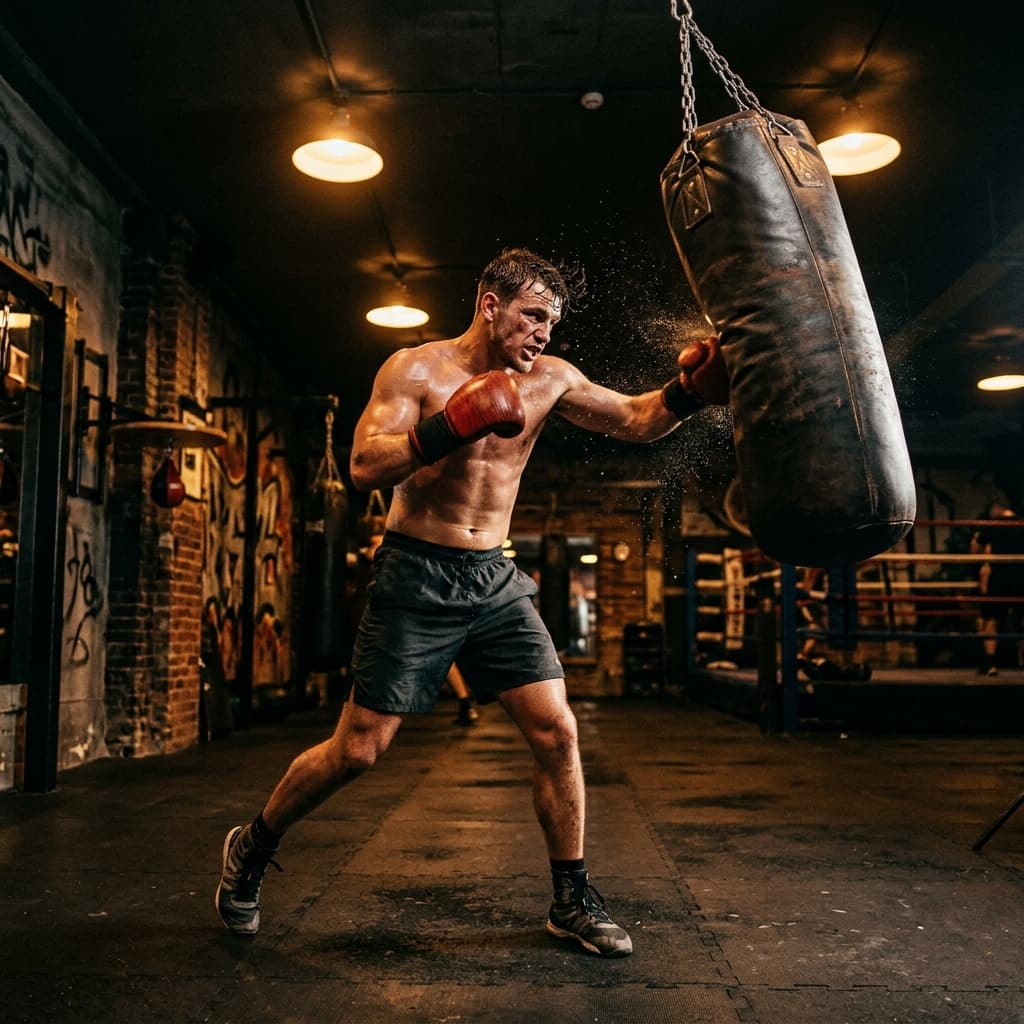
You hit a heavy bag with incorrect fist alignment, and your season ends instantly. A boxer's fracture is a break of the fifth metacarpal bone, the long bone that connects your pinky finger to your wrist. It happens when you land a punch with the outer knuckles instead of the dominant lead knuckles. When you make impact at an angle, the thin bone of the pinky knuckle absorbs the entire load. It snaps.
No amount of hand wrapping will protect you if your bones and wrists are weak. Hand wraps and gloves reduce impact, but they do not build bone density or strengthen the small muscles of your hands. You must train your hands, wrists, and forearms to handle impact forces.
This guide details the physical conditioning, anatomical alignment, and gear choices required to build hands that do not break.
The Anatomy of a Boxer's Fracture
To prevent a break, you must understand where the structural failure occurs. The hand has five metacarpal bones. The index and middle metacarpals are thick, aligned directly with the large bones of your forearm (the radius and ulna). The ring and pinky metacarpals are thinner, more mobile, and lack direct structural alignment with the main forearm bones.
When you throw a straight right hand or a hook and hit with the last two knuckles, the force travels up a weak column. The fifth metacarpal bends under the pressure and breaks near the neck, just below the knuckle.
A boxer's fracture causes immediate swelling, pain, and deformity. The knuckle looks like it has sunken in. Recovery takes six to twelve weeks, followed by physical therapy. In severe cases, surgeons must insert pins to align the bone. You can avoid this by aligning your punch and conditioning the hand structures.
Biomechanical Fist Alignment
Your knuckles must form a flat, structural wall. To achieve this alignment, you need to form your fist correctly and hit with the proper contact points.
Forming the Fist
- Roll your fingers tightly into your palm, starting from the fingertips.
- Press your fingertips hard against the base of your fingers.
- Lock your thumb down across the middle joint of your index and middle fingers. Never tuck your thumb inside your fingers, and do not let it float on top.
- Squeeze. A loose fist allows the bones to shift upon impact, which leads to fractures.
The Contact Point
You must land all straight punches with the knuckles of your index and middle fingers. These two knuckles form a direct line down your wrist and forearm. When they hit the target, the force transfers straight through the wrist into your forearm bones and skeletal frame. The pinky and ring knuckles should act as support structures, not impact leads.
Wrist Positioning
Keep your wrist straight. If your wrist bends up, down, or sideways on impact, the force transfers unevenly, and the wrist joint collapses. The back of your hand must align perfectly with your forearm.
Wolff's Law and Bone Adaptation
Bones adapt to the mechanical loads placed upon them. Under Wolff’s Law, bone tissue remodels itself over time in response to physical stress. If you subject your hand bones to controlled, progressive impact forces, the bone tissue becomes thicker and denser. Conversely, if you do not load the bones, they remain thin and fragile.
This adaptation process is slow. While muscles can adapt to new demands within weeks, bones, tendons, and ligaments require months of consistent, low-level stress to remodel. This is why you must perform hand conditioning regularly. You are not just building muscle; you are signaling your body to deposit calcium and build a stronger bone matrix in your metacarpal shafts.
Knuckle and Wrist Conditioning Routine
Perform this routine three times per week after your regular boxing workouts. Do not rush the progressions. Bone and tendon conditioning takes longer to adapt than muscle tissue. If you feel sharp, localized pain in the bones, stop immediately and rest.
1. Knuckle Push-Ups
Knuckle push-ups build bone density in the index and middle metacarpals and strengthen your wrist stabilizers. They train your body to keep the wrist straight under load.
- Surface: Start on a padded mat or wooden floor. Move to concrete only when you can do three sets of twenty repetitions without pain. Avoid uneven surfaces that could cause your wrists to roll.
- Execution: Place your fists on the floor with your palms facing each other. Balance your weight on the index and middle knuckles of each hand. Do not let the ring or pinky knuckles touch the floor. Keep your wrists straight. Lower your chest to the floor and push up, keeping your elbows close to your ribs.
- Biomechanical Cue: Imagine your index and middle knuckles are pillars driven straight into the floor. The force should pass directly down through the center of your wrists.
- Progression: 3 sets of 15 repetitions. Once easy, perform them in a decline position with your feet raised, or slow down the eccentric (lowering) phase to five seconds per repetition.
2. The Rice Bucket Grip Program
Rice bucket training builds hand strength and grip endurance without putting excessive strain on your joints. It works the extensors and flexors equally, correcting the muscular imbalances caused by punching.
- Setup: Fill a five-gallon bucket with uncooked white rice.
- Dig and Squeeze: Plunge your hands deep into the rice. Grab handfuls and squeeze hard, repeating the movement rapidly for 60 seconds. Focus on closing your fist completely.
- Fist Clenches: Bury your hands to the wrists. Make tight fists, then open your hands wide against the resistance of the rice. Repeat for 60 seconds. This builds the extensors on the back of the forearm, which support the wrist joint.
- Wrist Rotations: Keep your hands buried. Rotate your fists clockwise, then counter-clockwise, for 60 seconds. Keep the movement in the wrist joint, not the elbow.
3. Wrist Roller Work
The wrist roller targets the extensors and flexors of the forearm, preventing the wrist from buckling during hard impacts. It simulates the holding power needed to keep a fist tight.
- Setup: Stand upright, holding the roller in front of you at shoulder height.
- Execution: Roll the weight up by twisting the bar forward, alternating hands. Once the weight reaches the top, slowly roll it down under control. Do not let the weight drop.
- Safety Cue: Keep your shoulders packed down. Do not shrug. If your shoulders burn before your forearms, drop your arms slightly but keep the wrist action active.
- Volume: Perform 3 full cycles up and down.
4. Hammer Rotations
This exercise strengthens the pronators and supinators of the wrist, which are crucial for maintaining fist alignment on impact. It also builds strength in the radial and ulnar deviation planes.
- Setup: Hold a light hammer or a dumbbell by the end of the shaft with your elbow bent at 90 degrees and tucked against your flank.
- Execution: Rotate your hand inward until the palm faces down, then outward until the palm faces up. Control the movement. Do not let momentum swing the hammer.
- Volume: 3 sets of 15 repetitions per arm.
5. Plate Pinching and Towel Hangs
Grip strength correlates directly with fist tightness. If you cannot grip tightly, your fist will collapse when hitting a heavy bag.
- Plate Pinch: Hold two weight plates (start with five or ten pounds) smooth side out between your thumb and fingers. Hold for 30 to 60 seconds.
- Towel Hangs: Throw a thick towel over a pull-up bar. Grab the towel ends with both hands and hang for as long as possible. Aim for 30 seconds to start.
Gear Protocols: Wraps and Gloves
Proper conditioning must combine with correct hand protection during heavy training sessions.
Hand Wrap Mechanics
Do not skimp on hand wraps. Use 180-inch semi-elastic wraps. 120-inch wraps do not provide enough length to secure both the wrist and the knuckles.
- Wrist Anchoring: Wrap around the wrist three to four times to create a rigid base.
- Knuckle Padding: Run the wrap across your knuckles three to four times to form a protective pad.
- The X-Pattern: Run the wrap between each finger to pull the metacarpal bones together. This prevents the bones from spreading apart when you land a punch.
- Thumb Security: Loop the wrap around the thumb once to keep it locked to the fist.
- Palm Clearence: Ensure the palm remains clear of excessive wraps so you can make a tight fist.
Glove Selection
Never use bag gloves that resemble thin mittens. Use proper 16-ounce gloves for heavy bag work, especially if you weigh over 140 pounds.
- Foam Density: Choose gloves with dense foam padding. Sparring gloves have soft foam to protect your partner, which can bottom out on a dense heavy bag and injure your knuckles. Use bag-specific gloves for bag training.
- Wrist Support: Pick gloves with wide lace-up cuffs or hook-and-loop straps that pull the wrist tight. Lace-ups provide the best wrist stability.
Heavy Bag Training Rules
Your behavior on the bag determines your hand health.
- Do not punch cold: Always warm up your hands and wrists before hitting the bag. Start with shadow boxing and light double-end bag work.
- Listen to your impact sound: A clean punch makes a sharp pop. A sliding or scraping sound means your hand is landing at an angle, which places shearing forces on your knuckles.
- Manage your fatigue: When your shoulders tire, your wrists will bend and your fist will loosen. Stop hitting the bag if you cannot maintain a tight fist.
Weekly Conditioning Schedule
| Day | Exercise | Sets & Reps / Duration |
|---|---|---|
| Monday | Knuckle Push-ups | 3 sets of 15 reps |
| Rice Bucket Squeezes | 3 rounds of 1 minute | |
| Wednesday | Wrist Roller | 3 cycles up/down |
| Hammer Rotations | 3 sets of 15 reps | |
| Friday | Knuckle Push-ups | 3 sets of 15 reps |
| Rice Bucket Rotations | 3 rounds of 1 minute |
Summary Checklist
- Land punches on the index and middle knuckles only.
- Wrap your hands with 180-inch wraps, securing the metacarpals.
- Keep your wrists straight on impact.
- Perform knuckle push-ups on hard surfaces to build bone density.
- Train grip and forearm strength with rice buckets and wrist rollers.
- Wear dense, bag-specific gloves during heavy bag sessions.
See these techniques broken down by featured creator Coach Josh.
Ready to Practice?
Put what you learned into action with a guided shadowboxing session or timed heavy bag workout.