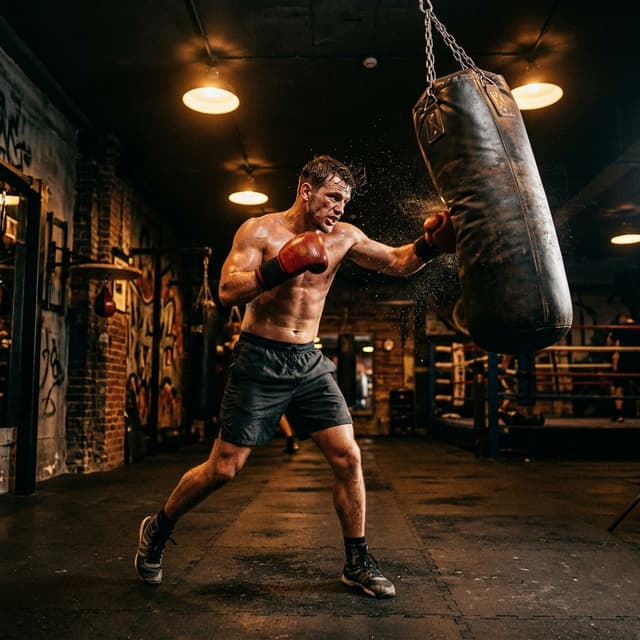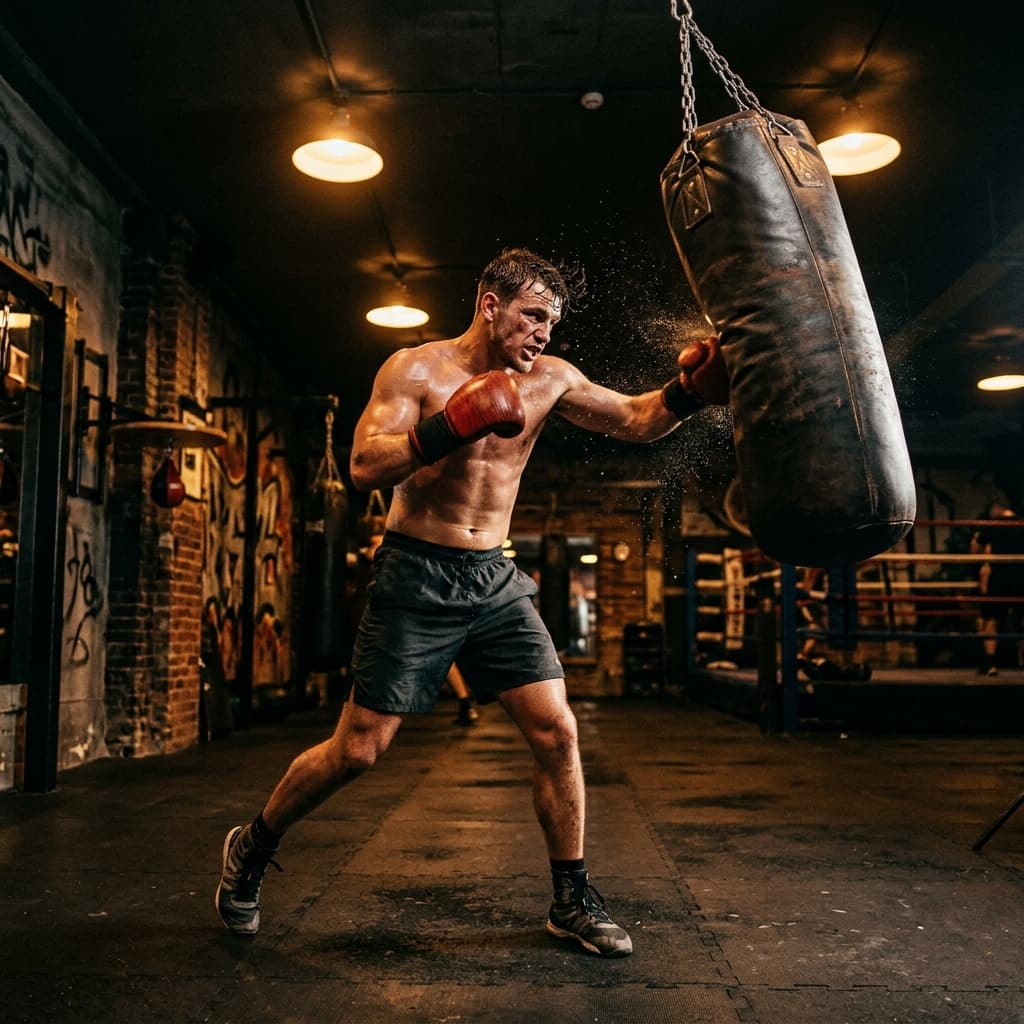
Most boxers treat shadowboxing as a lazy warm-up. They stand in front of a mirror, throw soft jabs, shake their shoulders, and chat with their teammates. This is a waste of valuable training time.
Shadowboxing is the most effective tool for building muscle memory, improving biomechanical alignment, and developing tactical visualization. In shadowboxing, you do not have to worry about getting hit or hitting a heavy bag. You can focus entirely on your form, your balance, and your footwork.
If you shadowbox without structure, you are just reinforcing bad habits. You must treat shadowboxing as a simulated fight. You must visualize an opponent in front of you: their height, their style, and the punches they are throwing.
Here are three structured shadowboxing templates designed to target technical execution and tactical simulation.
Template 1: The Technical Alignment Routine (3 Rounds)
This routine focuses on basic mechanics and structural balance. It is best used at the start of a training session to wire in correct movement patterns.
Round 1: Footwork and Base Alignment
Do not throw a single punch in this round. Keep your hands up in a tight guard.
- Move around the floor using push-steps. Move forward, backward, or laterally.
- Focus on maintaining the width of your stance. Never let your feet get too close together.
- Practice 45-degree and 90-degree pivots.
- Ensure your weight remains balanced on the balls of your feet.
Round 2: Single Punches and Retraction
Focus on throwing single punches at a slow, controlled pace (50% speed).
- Throw a jab. Ensure your chin is tucked behind your lead shoulder, and your rear hand is glued to your chin. Snap the punch back along the exact same path.
- Throw a straight cross. Pivot your rear foot and rotate your hip. Verify that your weight shifts slightly to your lead leg without leaning forward.
- Throw hooks and uppercuts. Focus on the hip rotation and the elbow angle. Keep the non-punching hand high.
Round 3: Combos with Head Movement
Throw basic combinations (two to three punches) but focus on head movement.
- Never start a combination without moving your head first (a slip or a duck).
- Never finish a combination without moving your head after the last punch.
- Practice slipping left, throwing a 1-2 combination, and rolling to the right.
- Reset your stance completely after each sequence.
Template 2: The Tactical Scenario Simulation (4 Rounds)
This routine trains your tactical brain. Each round simulates a different opponent style. You must visualize the opponent's movements and react accordingly.
Round 1: Facing a Taller Jabber
Visualize an opponent with a longer reach who is keeping you at distance.
- Use constant head movement to slip under their imaginary jabs.
- Step forward as you slip to close the distance.
- Throw double jabs to get inside their reach.
- Visualize getting inside their guard and throwing straight crosses to the body followed by hooks to the head.
Round 2: Facing a Pressure Fighter
Visualize an aggressive opponent who is marching directly toward you.
- Do not retreat in straight lines. Use constant lateral steps.
- Throw stiff jabs to halt their charge.
- Use 90-degree pivots to escape from imaginary corners.
- Throw check jabs and L-steps as you pivot out of their path.
Round 3: Inside Fighting and Framing
Visualize standing chest-to-chest with an opponent.
- Drop your level by bending your knees.
- Visualize placing a forearm frame on their collarbone.
- Throw short hooks and uppercuts. Keep your elbows at tight 90-degree angles.
- Roll your shoulders to deflect imaginary hooks, then counter instantly.
Round 4: The Counter-Puncher's Trap
Visualize a fast opponent who is looking to counter you.
- Use feints. Throw half-jabs and shoulder twitches to draw their counter punches.
- Visualize slipping their counter and firing your own right hand.
- Practice the pull counter: lean back to let their jab miss, then snap forward with a cross.
Template 3: The Conditioning and Volume Routine (3 Rounds)
This routine uses shadowboxing to build aerobic and anaerobic capacity. It focuses on hand speed, level changes, and high volume.
Round 1: Interval Hand Speed
Throw non-stop straight punches (jabs and crosses) at a steady pace.
- Every 30 seconds, accelerate to 100% speed for a 10-second burst.
- During the burst, pump your hands and feet as fast as possible.
- Keep your chin tucked and your hands returning to your face, even during the speed bursts.
Round 2: Level Changes and Footwork Agility
Focus on explosive movements and changing your level.
- Step forward and drop low as if ducking under a punch, then explode upward with a hook.
- Use the pendulum step to move side-to-side rapidly.
- Combine three-punch combinations with rapid step-backs and re-entries.
- This round should challenge your thighs and calves.
Round 3: Active Defense and Recovery
This round simulates the championship rounds of a fight when you are exhausted.
- Throw high-volume combinations (four to five punches).
- Follow each combination with active defensive movements: slip, roll, step back, and pivot.
- Do not stand still. Even when you are tired, your head must move and your feet must circle.
Pro Tips for Effective Shadowboxing
To get the most out of these templates, implement these training strategies:
Use Hand Weights Sparingly
Do not use heavy dumbbells for shadowboxing. Heavy weights change the biomechanics of your punches, causing you to drop your hands and strain your shoulders. If you want resistance, use small egg weights (one pound maximum) or resistance bands wrapped around your back.
Film Your Sessions
Set up a camera and record your shadowboxing. When you watch the footage, look for technical flaws.
- Are you dropping your non-punching hand when you throw hooks?
- Are your feet crossing when you move laterally?
- Is your head staying on the centerline during combinations? The camera does not lie. Identify the errors and fix them in your next session.
Wear Your Gear
Shadowbox in your boxing shoes. If you train in running shoes, you will not have the same connection to the canvas. Occasionally shadowbox with your 16-ounce sparring gloves on. The weight of the gloves will build shoulder endurance and prepare you for the physical reality of a real spar.
See these techniques broken down by featured creator Coach Josh.
Ready to Practice?
Put what you learned into action with a guided shadowboxing session or timed heavy bag workout.